Showing posts with label DEVI. Show all posts

Sunday, November 11, 2012

“The Meaning of This Extraordinary Performance” (COPP): Granada Television’s “Silver Blaze”


“Another of Colonel Huggins' interests was riding, an enthusiasm also embraced by Jeremy. As a child, Jeremy had a pony named ‘Babs’ whom he trained to climb stairs. Jeremy actually rode Babs into the Grange, which didn't sit well with Nanny Clifford, especially when it came to the inevitable by-products of Jeremy's four-legged, unhousebroken guest. (Nanny wasn't too pleased when Jeremy rode a donkey up into his room, either – the donkey had no trouble going upstairs, but balked on the way down.) Jeremy took riding lessons and competed in gymkhanas (equestrian field days consisting of exhibitions of horsemanship and pageantry). Although Jeremy decided at an early age that he wanted to become an actor, he once said that he wished he could have been a jockey, too. (He probably enjoyed filming the Holmes story ‘Silver Blaze’.)” (Lisa Oldham, The Brettish Empire)
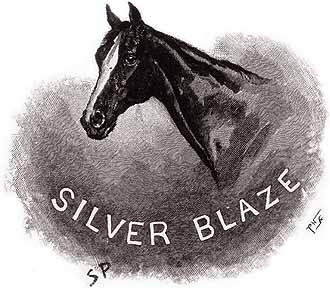

“My ignorance cries aloud to heaven,” wrote Sir Arthur Conan Doyle about “Silver Blaze,” a short story appearing in The Memoirs of Sherlock Holmes. “I read an excellent and very damaging criticism of the story in some sporting paper, written clearly by a man who did know, in which he explained the exact penalties which would come upon everyone concerned if they had acted as I described. Half would have been in jail, and the other half warned off the turf forever.” And the 1988 adaptation of “Silver Blaze” by Granada Television certainly included its own share of mistakes. The episode famously exceeded its allotted budget due to its need for an on-location shoot, and the large number of horses and human extras needed for the race scenes. The episode was preceded by Granada’s rendering of “The Devil’s Foot,” another episode that had required an expensive on-location shoot. This confluence of factors meant that by the time Granada was ready to produce their adaptation of “The Hound of the Baskervilles,” the series’ budget was already seriously compromised, and the fate of the HOUN adaptation with it (Davies 139). There are many arguable reasons as to why Granada’s HOUN failed when it had every expectation of success – not the least of these being that because of the DEVI and SILV adaptations, producer Michael Cox simply could not afford to construct the HOUN film that he had envisioned.

But its role in the failure of the HOUN adaptation does not necessarily mean that the production of SILV was not a success in its own right. The episode’s location, expensive as it must have been, is atmospheric in a way that a sound stage or even a cleverly set-dressed local field could never be.  The vast and unforgiving loneliness of the fields of Wales, Cheshire and Lancashire in the north of England are desolate and forbidding in the way that the moorlands of Dartmoor must certainly be. The stables of King’s Pyland appear as a mere dot on the landscape as Sherlock Holmes (Jeremy Brett) and Dr. Watson (Edward Hardwicke) travel in with Colonel Ross (Peter Barkworth). The neighboring stable of Backwater is miles away and likewise the odds of finding the missing Silver Blaze seem remote in the extreme. It is the expansiveness of the landscape that impresses upon the viewer the enormity of the Detective’s task. A horse lost on the sprawling moor – even a racehorse as extraordinary as Silver Blaze – will be as difficult to locate as a black cat in a coal cellar. “I expect a miracle from you, Mr. Holmes,” says Colonel Ross. The atmosphere created in the episode (of which the landscape plays no small part) is a testament to the extent of the miracle that was produced.

Photo Credit: bookishadventures.tumblr.com
And in regards to those costly horses and extras that seem to adorn every scene in SILV? The presence of more horses makes the absence of Silver Blaze even more profound and even more significant. King’s Pyland appears to be positively brimming with horses – why is the missing one so important? It is clear that none of the other horses can match Silver Blaze in strength, speed or skill – and the horse in question is not even present for the comparison! Bayard, the only other horse mentioned as being remotely in the same league as Silver Blaze, is admitted by Colonel Ross as just “intended for a pacemaker.” Indeed, Colonel Ross seems to be going to great lengths to reacquire Silver Blaze – even calling on Sherlock Holmes against his better judgment. The identity of the murderer of John Straker, Silver Blaze’s trainer, feels almost secondary to locating the missing horse. Sherlock Holmes even goes so far as to chide Colonel Ross for his neglect. He asks Colonel Ross, “[The location of Silver Blaze] is a minor point, of course, compared with the question of who killed John Straker?”

As for the extra cast members – what is a dramatic reveal without a crowd of people to witness it? When Holmes theatrically reveals the identity of Straker’s killer (who was Silver Blaze, of course, acting in self-defense), it is in the Winner’s Circle of the Wessex Cup, surrounded by a large crowd of well-wishers. As the realization dawns on Colonel Ross that he has been horribly deceived by a man that he trusted implicitly, the slowly encroaching crowd makes his error in judgment seem palpable. For a moment the man seems surrounded by his mistakes – rather than by onlookers – unable to escape them. But perhaps even more simply: what is a story about a racehorse without other horses to race against, and people to watch the race?

Photo Credit: bookishadventures.tumblr.com

The episode also lends the necessary weight and grandeur to one of the most vaunted and recognizable canonical lines. But before Jeremy Brett’s Sherlock Holmes ever speaks a word about the infamous “dog in the nighttime” (the one who did nothing, of course), there is a scene in which he enters the missing racehorse’s stable and is subjected to the snarling and vicious barks of the resident canine. There is a pause, a moment of utter stillness, marked by nothing more than the subtle upward curve of Brett’s mouth. This is not the frenetic silence of a man frozen in terror by the unexpected onslaught of an unruly dog, hoping to avoid injury. This is a moment of intensity and gravitas, as understood by a man for whom the moment of knowing supersedes all other factors and distractions.

There is quite a lot that is tangible about Granada’s adaptation of SILV – moments that are so significant and weighted that the viewer can seemingly reach out and touch them. Holmes reaching out to gently touch the hand of a distraught maid as she recounts finding John Staker’s corpse. Holmes reaching barehanded into the muddy landscape to retrieve a hidden nail. Sherlock Holmes, Dr. Watson, and Inspector Gregory (Malcom Storry) passing around a cataract knife as if it were some precious artifact. The Great Detective hanging his cane on the door of the stable with a significant look and gesture, just before he washes the black paint from a horse, only to reveal the animal beneath as the missing Silver Blaze. Holmes grinning and snickering as he collects his winnings after the Wessex Cup race (one of those moments of Sir Arthur Conan Doyle’s “ignorance” that mentioned earlier). Finally, Holmes reaching out to stop an annoying ringing dinner bell with his hand, as he recounts the solution of the case to Colonel Ross and Dr. Watson.

Photo Credit: bookishadventures.tumblr.com

The viewers of Granada’s Sherlock Holmes series can wistfully speculate what would have become of their adaptation of HOUN had budgetary mistakes not been made in the production of DEVIL and SILV. Even Jeremy Brett was known of having wished that they could go back and re-film that episode (Davies 144). But speculation is a fruitless endeavor, changing nothing. And it distracts from the fact the Granada’s SILV episode is outstanding and artfully constructed in its own right, with unforgettable moments that linger after the episode ends – which leave an indelible impression on the screen.

oOo

Sources:


“Better Holmes & Gardens” now has its own Facebook page.  Join by “Liking” the page here, and receive all the latest updates, news, and Sherlockian tidbits.

Monday, October 3, 2011

Currently on Twitter...

As part of an ongoing project on my Twitter feed, I'm delivering stories from the Sherlock Holmes canon in tiny installments of 140 characters or less.  Last week,  I finished up "The Problem of Thor Bridge," and I hope everyone enjoyed taking a closer look inside the "tin dispatch-box," which Dr. Watson keeps at Cox & Co., at Charing Cross.

The current story is "The Adventure of the Devil's Foot."  I hope you will join in, and see if you agree with the Great Detective's own personal assessment of the case: "...strangest case I have handled."

Check out my Twitter feed for a daily installment, although I am usually inspired to post more than once a day.  And don't forget you can read through the original canon stories online.

Friday, June 10, 2011

“It was an admirable hiding-place”: The Adventure of the Six Napoleons

I gave serious thought to subtitling this post: “The Six Lives of Sherlock Holmes,” but it sounded a bit too much like a bad cable television drama for my liking, even if Sherlock Holmes himself had a well-documented appreciation of sensational literature.  Throughout the canon, Sherlock Holmes serves in many capacities, and is many things to many people.  Sometimes the list of descriptors is not so flattering, as in “The Speckled Band,” when the villainous Dr. Grimesby Roylott says to Holmes: “You are Holmes, the meddler…Holmes, the busybody…Holmes, the Scotland Yard Jack-in-office!”  On the other hand, some are flattering to the point of sounding obsequious, such as when Inspector Stanley Hopkins, in “Black Peter,” tells Holmes: “…I should never have forgotten that I am the pupil and you are the master.”
There are a multitude of planes and facets to Sherlock Holmes and his personality.  Some traits are quite clear and distinct, while some are as subtle and elusive as “trying to catch an arrow in mid-flight.”  And more often than not, many of Holmes’s characteristics are difficult to reconcile with each other, such as how a “perfect reasoning and observing machine” (SCAN) can also play his violin with the sensitivity and grace to lull his friend to sleep (SIGN).  Sherlock Holmes describes the case detailed in “The Six Napoleons” as “absolutely original in the history of crime,” but even more interesting is the variety of personality traits he presents to the reader within the tale.  Each trait is distinct and unique, but ultimately, dependent upon each other to create the complete picture of Sherlock Holmes that Dr. Watson presents in this instance.
~~~
1. The Homebody:  SIXN opens on what is actually a very charming, domestic scene: Holmes, Watson, and Inspector Lestrade seated around the fire at 221B Baker Street, smoking cigars and discussing the news and weather.  Moreover, Watson informs the reader that this is not the first such visit that the inspector has made and “It was no very unusual thing for Mr. Lestrade, of Scotland Yard, to look in upon us of an evening, and his visits were welcome to Sherlock Holmes…”  Later, before the trio ventures out on a late-night visit to Chiswick, Holmes invites Lestrade to rest on the sofa until the proper time, and it is all very friendly and comfortable, with Holmes giving off the impression of a king governing from his favorite armchair, secure in his domain.
Furthermore, Inspector Lestrade’s visits serve another purpose, in that Lestrade keeps Holmes up-to-date on the latest news from Scotland Yard and specifically, any details of the cases on which the inspector is currently engaged.  The Detective, in turn, “…was able occasionally, without any active interference, to give some hint or suggestion drawn from his own vast knowledge and experience.”  While it goes without saying that Sherlock Holmes was an incredibly active man, who would occasionally go to any extreme to solve a case, SIXN also shows the side of Holmes that was sometimes content to solve crimes from his armchair, in front of his fire.
2. The Relentless Pursuer:  One of the victims of SIXN is Mr. Horace Harker, who works for the Central Press Syndicate.  After Harker’s Napoleon bust is stolen, and a man is murdered on his front step, Holmes has Inspector Lestrade tell Harker that clearly “…a dangerous homicidal lunatic, with Napoleonic delusions, was in his house last night.”  Holmes conveys this opinion even though he personally believes no such thing.  More importantly, Holmes knows that Harker intends to write-up the story for the evening press, and now this piece of fraudulent and ill-thought-out information will likely appear in print.  When the item does indeed appear in the newspaper, Holmes famously says, “The Press, Watson, is a most valuable institution, if you only know how to use it.”  According to Leslie Klinger’s New Annotated Sherlock Holmes, this is “…perhaps the first recorded instance of deliberate manipulation of the news…” (1033).
But this is not the first example of Holmes in relentless pursuit of his own ends.  Periodically throughout the canon, Holmes has been known to impersonate a member of the clergy (SCAN), break into homes (CHAS, BRUC), and even allow a criminal to go free, if he felt the crime did not warrant whatever consequences loomed (BLUE).  He even once required Watson to serve as a makeshift jury, while he served as judge in a mock trial (ABBE).  Sherlock Holmes typically operates with his own goals and ends in mind.  Sometimes those ends work fortuitously with the goals of others, but that is merely an added bonus, rather than an intended purpose.
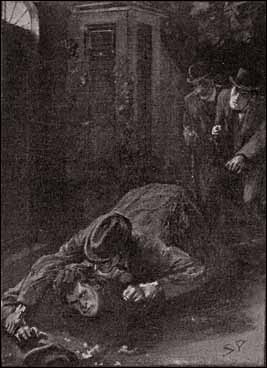
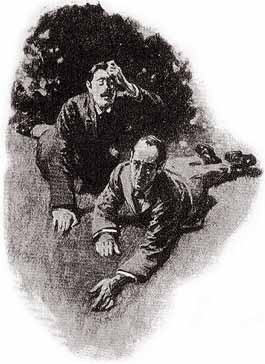
3. The Attack Dog: When he finally has the notorious Beppo cornered, Sherlock Holmes is not satisfied with any subtle or modest method of capture.  Watson claims that Beppo was perfectly intent upon and consumed with smashing his stolen statue and combing through the debris, so it is possible that the criminal could have been cornered and captured quietly, as he was outnumbered and outmaneuvered.  But instead, “With the bound of a tiger Holmes was on his back, and an instant later Lestrade and I had him by either wrist, and the handcuffs had been fastened.”  Illustrations of the scene sometimes show Holmes pinning Beppo firmly to the ground, his body sprawled entirely over him, giving no quarter.  It is no wonder that Watson describes the man as having, “...a hideous, sallow face, with writhing, furious features, glaring up at us…”  If in that position, most people would probably look similarly furious—criminal or no.
The canon is full of examples of Sherlock Holmes’s physical prowess.  He is an accomplished boxer, singlestick fighter, and fencer.  Perhaps most famous is his knowledge of the Japanese art of baritsu [sic], a skill he uses to fend off Professor Moriarty at Reichenbach Falls.  But these skills are all just part and parcel of Holmes’s personality: if something is worth doing, it is worth doing well, but also worth doing spectacularly.  Holmes could have easily taken out Moriarty with a pistol or a knife on that mountain in Switzerland, but why would he do that when he could physically clash with his archenemy, twisting him under his own hands, before throwing him, screaming, over the falls?  Holmes isn’t just a physical man—as his capture of Beppo shows—he is a dramatic one, a characteristic that is also demonstrated elsewhere in the story.
4. The Dramatist: The Great Detective has a sense of humor that could occasionally be described as “ill-timed,” or even cruel.  For example, rather than simply producing the sensitive government treaty that he had been hired to retrieve (the loss of which had driven one man to illness), Holmes requests that Mrs. Hudson hide it under a breakfast dish for their client to find (NAVA).  And while it’s been discussed elsewhere that Holmes’s “old bookseller” costume from EMPT was necessary for a number of safety and logistical reasons, the dramatic method in which he revealed himself to Watson probably was not.  Such is the case in SIXN after Holmes acquires the final Napoleon bust from Mr. Sandeford:
“When our visitor had disappeared, Sherlock Holmes’s movements were such as to rivet our attention.  He began by taking a clean white cloth from a drawer and laying it over the table.  Then he placed his newly acquired bust in the centre of the cloth.  Finally, he picked up his hunting-crop and struck Napoleon a sharp blow on the top of the head.  The figure broke into fragments, and Holmes bent eagerly over the shattered remains.  Next instant, with a loud shout of triumph he held up one splinter, in which a round, dark object was fixed like a plum in a pudding.”
I suppose a simple, “Don’t mind me, but I think a rare, stolen pearl is embedded in this plaster bust so I’m going to smash it apart with a hunting crop,” would have been out of the question here?  As Holmes once said, “I begin to think, Watson…that I make a mistake in explaining.  'Omne ignotum pro magnifico,' you know, and my poor little reputation, such as it is, will suffer shipwreck if I am so candid” (REDH).  Holmes made that statement in 1890, and by 1900 when SIXN takes place, his reputation as a dramatist is firmly established.  This goes a long way towards explaining why Watson and Lestrade are pleasantly surprised, but not shocked, by Holmes’s dramatic revelation.
5. The Peer:  And on the subject of surprises, Inspector Lestrade has one up his own sleeve before the case is over.  After enthusiastically applauding Holmes’s grand reveal and intricate explanation, Lestrade says:
“I’ve seen you handle a good many cases, Mr. Holmes, but I don’t know that I ever knew a more workmanlike one than that.   We’re not jealous of you at Scotland Yard.  No, sir, we are very proud of you, and if you come down to-morrow, there’s not a man, from the oldest inspector to the youngest constable, who wouldn’t be glad to shake you by the hand.”
What a dramatic change from some of Holmes’s earlier interactions with Scotland Yard—considering that the Detective was even once accused of stealing all the credit for solved cases from the official police (NAVA).  Furthermore, Lestrade is saying quite a bit about the Yard’s relationship with the world’s only consulting detective.  He shows that he appreciates the considerable effort that goes into Holmes’s methods—unorthodox as they may be—and he’s saying that everyone else at the Yard sees it too.  He’s recognizing the many years that he and Holmes have worked together, and that while they will never work together in an official way, that he considers Holmes an equal, if not a colleague, and that the feeling is shared by the collective force.  SIXN marks Inspector Lestrade’s last appearance in the canon (after this story, he is only mentioned in passing), making his remarks a fitting closure to his relationship with Sherlock Holmes.
6. The Heart: In her book, The Fictional 100: Ranking the Most Influential Characters in World Literature and Legend, Lucy Pollard-Gott says, “Sherlock Holmes continues to attract us, assuredly for the quality of his mind, but also for the quality of his enigmatic heart” (51).  Throughout the canon, the reader gets brief glimpses of that heart: when he is apologetic for nearly sentencing Watson and himself to a life of nightmarish madness (DEVI), and perhaps most famously when he thinks Watson’s life is compromised (3GAR).  But Holmes’s reaction to Lestrade’s compliment is equally memorable: “’Thank you!’ said Holmes. ‘Thank you!’ and as he turned away, it seemed to me that he was more nearly moved by the softer human emotions than I had ever seen him.”  The scene is made even more haunting by Jeremy Brett’s 1986 interpretation.
Sherlock Holmes may have worked more for “the love of his art than for the acquirement of wealth” (SPEC), but that does not mean he was above praise, or was not susceptible to a well-put or genuine compliment.  Lestrade’s proclamation moves him, even if it just for a moment.  Suddenly the Great Detective becomes accessible, and human.  It is extremely improbable (though I suppose, not impossible) that Holmes would ever have crossed the threshold of Scotland Yard, seeking those handshakes that Lestrade guaranteed.  But for just a moment, he seems to consider it.  For just an instant, he seems almost open to the possibility—like a regular man, who might enjoy something like that.
~~~
In SIXN, the reader experiences the many facets of Sherlock Holmes’s personality, presented on a broad continuum.  But not one of the characteristics encompasses him entirely.  It would be doing the Detective a disservice in pretending that he could be defined completely by one aspect of his character, no matter how important that characteristic may seem.  Dr. Watson presents a wide array of ways to approach Sherlock Holmes and his methods, and while that might never make him ordinary, it goes a long way towards making him accessible.
oOo
June 27 marks the beginning of the next blog contest, and this one will call on your creativity and ingenuity to win.  The prizes have arrived and I can’t wait to get started!  Watch this space for details.
If you have the means to do so, please consider purchasing a DVD copy of The Lady Shallot.  Proceeds over the next five weeks will help support a lovely family through a difficult time.  Details here

Friday, March 18, 2011

“The Meaning of This Extraordinary Performance” (COPP): Granada Television’s “The Devil’s Foot”

“To me, the Sherlock Holmes stories are about a great friendship.  Without Watson, Holmes might well have burnt out on cocaine long ago.  I hope the series shows how important friendship is” (Jeremy Brett).
Have you been paying attention?  I mean, specifically, to this blog?  I hope so, for a lot of reasons, but more relevantly, if you have been paying attention, you’ve probably figured out who my favorite Sherlock Holmes is.  A lot of talented, brilliant actors have taken on the mantle of the Great Detective over the years, so I try to remain unbiased when it comes to this blog.  Having a favorite does not make me blind to all others, of course.  However, as I looked back over my last few posts, I saw that my preference had managed to worm its way in anyway, subtly and stealthily, much to my chagrin.  Whoops.
Anyway, since my secret is out, “The Adventure of the Devil’s Foot” is a wonderfully atmospheric story in its original form, and Granada Television is, of course, famous for their nearly compulsively faithful adaptations of the Sherlock Holmes canon.  Cornwall is deliciously gothic and sinister as a setting, but it is one thing to read: “The glamour and mystery of the place, with its sinister atmosphere of forgotten nations, appealed to the imagination of my friend, and he spent much of his time in long walks and solitary meditations upon the moor,” and quite another to see Sherlock Holmes walking pensively and alone amongst the dismal landscape, sitting perched high atop ancient ruins, as his thoughts turn inward—looking pale, diminished, and one stiff breeze away from total collapse.
But if I wanted to speak solely on the subject of atmosphere and setting, I would be writing on DEVI, the original text, and not the television adaptation.  I think that the 1988 version of DEVI is worth discussing on its own merits, based upon the inclusion of three new plot points into the story: Sherlock Holmes’s (literal) abandonment of his cocaine habit on the beaches of Cornwall, the inclusion of Holmes’s nightmarish vision under the influence of Radix pedis diaboli, and, finally, the subsequent aftermath of the vision in which Holmes calls out to Dr. Watson by his first name.  These three additions change the whole tenor of the episode, and can be influential in interpreting the original tale, if you like.
Beginning, of course, at the beginning: after what only seems like a few minutes after their arrival in Cornwall (but who can say, really, in television time), Watson enters the cottage to find Holmes at a table injecting himself with cocaine.  The Doctor says nothing, but his expression speaks volumes, and an exceedingly tense moment passes between the two men, before Watson leaves to tend to their luggage.  Not long after, during a scene in which Watson narrates his companion’s activities during the early days of their holiday, we see Holmes standing alone the beach, taking a deep breath before removing a vial of cocaine for his coat pocket.  He empties the vial onto the sand, and then buries the syringe (and modern medical professionals everywhere cringe…someone could step on that). 
Interestingly, Holmes doesn’t appear to inform Watson of his decisions or his actions, as later in the episode, as Holmes sits recoiling from the pain of withdrawal, Watson seems concerned for his friend, but mostly confused—as if he does not know what to make of this new, odd behavior.  Furthermore, after the spasm passes, Holmes smiles benignly: “Cheer up, Watson.  Sea air, sunshine, patience!” and then, “All will be revealed!”  On the surface, he’s speaking of the case, of course, but his attitude is reminiscent of one presenting a well-thought-out gift to a loved one, and Holmes will absolutely not let the surprise be spoiled until it’s ready.  It’s typical of Sherlock Holmes to attempt something potentially life-threatening or dangerous on his own because he wants to, or because he can, but in this instance he seems to act because he must.
Moving on (and more on the subject of Holmes and his danger-for-danger’s-sake habit): in the original text of DEVI, because of the limited perspective of the narrator, the reader is only given access to Watson’s thoughts as the poison smoke of the devil’s foot root overtakes them.  It is an ugly picture:
“A thick, black cloud swirled before my eyes, and my mind told me that in this cloud, unseen as yet, but about to spring out upon my appalled senses, lurked all that was vaguely horrible, all that was monstrous and inconceivably wicked in the universe. Vague shapes swirled and swam amid the dark cloud-bank, each a menace and a warning of something coming, the advent of some unspeakable dweller upon the threshold, whose very shadow would blast my soul.”
But in this televised version, we see Holmes’s vision, and it is nightmarish, gruesome.  There is endless running, across endless fields, and the ghost of a child in a mirror.  There is blood, and churning water, and ghastly, religious-themed images.  And behind it all, is the specter of Professor Moriarty saying, “You must stand clear, Mr. Holmes, or be trodden under foot” (FINA).  So, we walk away from this scene knowing that Holmes is a haunted man, not immune to fear, as we may have thought (or want to believe, your choice).  The original text leaves the reader blind to what happens to Holmes during the ordeal (though Watson describes his friend as looking “drawn with horror”), and even though Holmes says, “It was an unjustifiable experiment even for one’s self, and doubly so for a friend,” there is no way to know for certain what he went through.  Fear being a relative thing, of course.  A televised version, and this particular one, lends depth to the ordeal, and the viewer sees another instance where, perhaps, Holmes acted because he must, and not because he wanted to—because Holmes’s personal sense of amusement might be twisted, but there are limits.
Finally, Holmes awakes from his vision, screaming, insensible, on the ground outside the cottage, with Watson shaking him and calling his name.  After what seems like a full minute of hysterics, Holmes finally comes to his senses enough to call out to his friend…by his first name.  “John!” he screams.  It is a startling moment, one that Jeremy Brett commented on:
“Well, Holmes is semiconscious at the time, right?  It really was the one time that he could call him John.  I think in extremis he might have said ‘John.’ It gives another slant to it.  I slipped in ‘John’ just to show that, underneath it all, there was just something more than what they say, that Holmes is all mind and no heart.”
It goes back, I think, to who Sherlock Holmes becomes when his layers are stripped away.  There are many interpretations, and they’re all subjective, of course—since this is something we never really see in the canon (just as he never refers to Watson by his first name).  But in a moment of semi-conscious horror, there are going to be very few layers, very little armor.  And there again, we see the things that Holmes must do, and not what he can, or wants to do.
Sometimes readers get caught up in seeing Sherlock Holmes as a man that is driven by proving himself, and demonstrating what he can do to everyone around him; that his every action had a pointed, defensive edge to it, an almost passive-aggressive streak, in which he is determined to show himself capable, and worthy.  Televised adaptations, and particularly clever ones like the 1988 version of “The Devil’s Foot,” serve as excellent reminders that despite what Holmes may have believed or thought of himself, he was still human, with compulsions that prevented him from being entirely separated from the human experience.  He was still one of us, if he only walked amongst us briefly.
oOo
One more week to enter my blog contest!  It’s so easy to enter, and the prizes are very cool—a little light reading, a little music.  Sounds like my perfect Sunday afternoon.