Showing posts with label SCAN. Show all posts

Tuesday, March 1, 2016

A Toast to the Woman: If You Can Believe It

[As presented as the February 2016 meeting of Watson's Tin Box in Ellicott City, Maryland.]

I’m probably one of the least likely of people to toast to the Woman. My feelings about Ms. Adler are well known, and well-documented, and there is no love lost between us. Frankly, I think she gets far too much credit.

For starters, she didn’t beat Sherlock Holmes. He knew exactly where that photograph was; she just managed to run away before he could confront her. And if that is the metric by which we are now determining winners – well, I was a much better athlete in high school than I originally believed. If we're being honest, she merely committed the literary equivalent of taking her ball and going home.

As it was, I was both pleased and excited when Elementary premiered on CBS in 2012, primarily because I initially heard that Irene Adler would not be appearing on the show. I was ecstatic to learn that supposedly her character had been brutally, horribly murdered off-screen. I was gleeful. I might not be a nice person.

Anyway, imagine my disappointment at the end of the first season when it was revealed that Irene Adler was alive, and that she would be played by Natalie Dormer. But there was a twist. Elementary’s Irene eventually revealed herself as a female Napoleon of Crime, Jamie Moriarty. For obvious reasons, they had my attention. I guess it doesn’t take much.

Elementary’s Jamie Moriarty was coolly calculating. She inspired both respect and fear. She was both shrewd and fiercely intelligent. She did not suffer fools lightly. 

All right. I'm listening. You have my attention.   

But most importantly, she actually, genuinely deceived Sherlock Holmes. For a time. Which is fine, because no one can get past Sherlock Holmes forever. Nor should they.

Here, finally, was the Irene Adler I had been promised. The one everyone else had seen, but I never had.

Please raise a glass with me and toast to the Woman – may we all find the incarnation of Irene Adler we need, if not the one we deserve.

oOo

"There is no Irene. There is only Moriarty, and Moriarty is never going to change." (Joan Watson)

Sunday, January 19, 2014

An Open Letter to Mrs. Godfrey Norton (Née Adler)

Dear Mrs. Norton,

I'm the first person to admit that I don't always understand the appeal of some things. I've never been particularly fashionable or cutting-edge, and so I often find myself on the outskirts of what is popular. Parkour, for example, is something I don't particularly understand. Wearing tights as pants is another. Pretty much anything involving John Mayer. And you, Mrs. Norton. I just have never been able to bend my brain around your incomprehensible, interminable appeal. Perhaps I'm uncharitable – there are certainly enough people who have called me such for this opinion – but I tremendously dislike you. In fact, despite the numerous warnings I have received over the course of my life about the strength of this word, I would go so far as to say that I hate you.


Ick.

I hate you whether you exist in black and white, in the printed word, or as a disembodied voice on the radio. And I certainly hate you when you are live and in full color on my television or cinema screen. I hate you whether you are played by Charlotte Rampling or Rachel McAdams. I even hate you when you are played by Gayle Hunnicutt opposite the incomparable Jeremy Brett (which is really saying something, because even though I consider all of Mr. Brett's performances sacrosanct, your episode remains the least viewed one from my copy of the Granada Television collection). I hate you whether you are an opera singer, an adventuress, a single mother to a young boy who loves music and puzzles, or even just an unapologetic thief. And I especially hate you in one of your most recent incarnations as a dominatrix (your hairstyle, to be frank, was utterly confounding). I hate you whether you are a redhead, a brunette, or a blonde. In fact, one of the things that I liked best about the recent television series, Elementary, is that I was promised that you were dead. Even better, I was promised you had been brutally murdered off-screen, before the series even began. The mere idea of it was delicious. I was thrilled. I was ecstatic. I promise you that I was beside myself with joy. And while it appears that the rumors of your death have been greatly (and cruelly) exaggerated, I assure you that CBS Television still owes me a rotting corpse. Yours, preferably, but I’m not picky. I will wait. 


Natalie Dormer as Irene Adler in CBS Television's Elementary.
They promised me that you were dead.

But mostly I hate you because you simply will not go away. Must you stick your perfectly powdered nose into every plot that calls for a XX chromosome? The mere mention of your name is often enough to make me put down whatever pastiche I may be reading – no matter how much I paid for it or how difficult it was to obtain – and use the pages of the book as a liner for my cat’s litter-pan. And my goodness, you do turn up so very often, don't you? A popular website, which catalogues historical and fictional characters appearing in Sherlockian pastiches, lists dozens, if not hundreds, of references to your person in non-canonical fiction. It’s really too many. Having only appeared in one original story, you are just as prolific – but not nearly as interesting as – the late, lamented Professor Moriarty. Does the plot call for a uniquely feminine touch? There you are. Has a member of royalty found himself in some sort of moral morass? Up pops your name. Has Sherlock Holmes, heaven forbid, found himself in some sort of romantic imbroglio? You’re involved, Mrs. Norton. And, even more offensive, does the Great Detective need to be brought down a peg? Of course you show up. 


And your hat is stupid.

But to be honest, you get more credit than you really deserve, don’t you think? While Sherlock Holmes once claimed, “I have been beaten four times – three times by men, and once by a woman,” (FIVE) I think he was being a little generous. Let’s assume, first of all, that Holmes is referring to you in that passage, even though he doesn’t mention you by name, does he? A well-timed escape is not the same as beating someone. That would be like saying that the Worthingdon bank gang (RESI) beat Sherlock Holmes because they managed to drown before their capture. Or the murderers of John Openshaw (FIVE) beat Sherlock Holmes for the same reason, ironically. It would be like saying that Sherlock Holmes was bested in “The Lion’s Mane,” because the murderer turned out to be a jellyfish and not a human being as originally assumed. Could you imagine the Great Detective saying, “I have been beaten five times – three times by men, and once by a woman… and once by an invertebrate creature”? 


Yup, I don't know what to say either, madam.

Sherlock Holmes caught you out, madam. He devised a trap, and you fell into it precisely as he imagined: 
"The smoke and shouting were enough to shake nerves of steel. She responded beautifully. The photograph is in a recess behind a sliding panel just above the right bell-pull. She was there in an instant, and I caught a glimpse of it as she half-drew it out. When I cried out that it was a false alarm, she replaced it, glanced at the rocket, rushed from the room, and I have not seen her since." (SCAN)
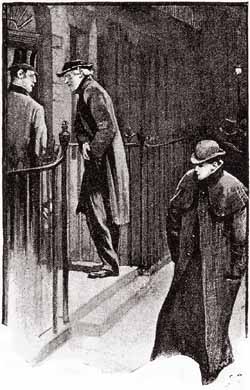
You did exactly what he thought you were going to do. Far from being clever, you were predictable, madam. When Sherlock Holmes tells the iniquitous King of Bohemia, “From what I have seen of the lady she seems indeed to be on a very different level to your Majesty,” I feel it was intended more as a slight at the king, than any compliment of you. And while I’m at it, donning a disguise for an evening stroll and a verbal jab doesn’t confirm any supposed cleverness either. If anything, it makes you appear childish, unable to admit you had been run to ground. “Good-night, Mister Sherlock Holmes,” indeed. It was almost like a rude gesture, don’t you think? And I should mention that even then you didn’t even have the man completely baffled. “I’ve heard that voice before,” Holmes said.  


Don't look so smug. You haven't earned it.

I have also heard your voice before, Mrs. Norton, and it seems I am condemned to hear it over and over again. I find myself lamenting, as Dr. Watson did in “The Adventure of the Copper Beeches,” that Sherlock Holmes expressed no interest in Miss Violet Hunter and her luxuriant, chestnut hair once she ceased to be the focus of a case. Not because I feel that the Great Detective is in any particular need of a female companion, but because it means I would be rid of you. I find myself constantly on the alert for your presence, looking for mentions of your name, just as one would scan a dark alleyway for danger. I fear you will always be there, on the outskirts, claiming a cleverness that isn’t deserved and isn’t yours, but believe me, madam, you don’t have me fooled. I’m on to you.

Yours very truly (and honestly),
Jaime Mahoney


oOo

The above tongue-in-cheek piece first appeared  ironically  the 11th (2013) edition of Irene's Cabinet, a Sherlockian publication by Watson's Tin Box.

“Better Holmes & Gardens” has its own Facebook page. Join by “Liking” the page here, and receive all the latest updates, news, and Sherlockian tidbits.

Saturday, March 30, 2013

“I should very much like to have a word with Mr. Holmes.” (3GAR): Some Thoughts on the Dichotomy of Sherlock Holmes

"It was 'The Adventures of Sherlock Holmes.' I opened the book with no realization that I stood, or rather sat, on the brink of my fate. I had no inkling, no premonition, that in another minute my life's work, such as it is, would be born... I finished 'The Adventures' that night... As I closed the book, I knew that I had read one of the greatest books ever written. And today I realize with amazement how true and tempered was my twelve-year-old critical sense. For in the mature smugness of my present literary judgment, I still feel unalterably that 'The Adventures' is one of the world's masterworks." (Frederic Dannay)

"The best literary work is that which leaves the reader better for having read it. Now nobody can possibly be the better – in the high sense in which I mean it – for reading Sherlock Holmes, although he may have passed a pleasant hour in doing so. It was not to my mind high work, and no detective work ever can be, apart from the fact that all work dealing with criminal matters is a cheap way of rousing the interest of the reader." (Sir Arthur Conan Doyle)

Sherlock Holmes ruined my life. But he also saved it. Because of Sherlock Holmes, I now know more about the world, the people in it, and myself. Previously a curious and avid student, Sherlock Holmes has made me compulsive about learning to an obsessive degree. I think differently, and more often, but to be fair, I’m usually thinking about a particular subject. And the things I know aren’t always something everyone would find particularly interesting, useful or necessary to everyday life. Some people would call it superfluous knowledge. These aren’t always scholarly or erudite facts, either. But some of them are. Nor has it always been a lofty or cerebral education. But some of it has been. And now as I stand at the precipice of 100 blog posts (well… sit, really, as Frederic Dannay was sitting… I’m sitting at my computer), I’m prepared to admit to the dichotomy. I’m here with hat in hand (not a deerstalker, rather more like a homburg, as we all know) and confess that the Great Detective is both the best and worst thing that ever happened to me.


I’m sure that some of Sherlock Holmes’s canonical clients would say much the same thing. While Holmes might have been able to solve whatever mystery they first approached him with, the explanation may have ultimately exposed something that they would rather the world have not known, something that they would never have willingly revealed to others, or simply something that they would rather have not realized about themselves. In “The ‘Gloria Scott’”, one of Holmes’s very first cases, Victor Trevor undoubtedly felt relief that Holmes was able to explain what happened to his father – the real identity of Hudson and the reason for the shadow he cast over the elder Trevor’s life – and the reason for his father’s fatal reaction to a seemingly innocuous letter. But ultimately Holmes’s explanation revealed uncomfortable facts about his father’s past – things that would be even more unsettling and disturbing now that Victor’s father was no longer alive to discuss them. There may been a solution for Victor Trevor, but there would never be any closure. Likewise Violet de Merville of “The Adventure of the Illustrious Client” probably felt no joy that her fiancé, the villainous Baron Gruner, was unquestionably revealed as an utter blackguard by Sherlock Holmes – but eventually there must have been relief at the disastrous future that she so narrowly avoided.  

And no one was more versed in the disparity of life and human nature than Sherlock Holmes. As he said to Dr. Watson: “I assure you that the most winning woman I ever knew was hanged for poisoning three little children for their insurance-money, and the most repellent man of my acquaintance is a philanthropist who has spent nearly a quarter of a million upon the London poor” (SIGN). But being aware of that disparity doesn’t mean he was always able to correctly assess it. In “The Yellow Face,” the Detective is quite convinced of his own theory: that Mrs. Munro’s first husband is the occupant of the mysterious cottage and he is an unscrupulous blackmailer. The climax of the story reveals both Sherlock Holmes’s failings, and that the occupant of the cottage is Mrs. Munro’s daughter from her first marriage. The Detective had assumed the worst, and Mr. Munro neatly assesses the situation in saying: “I am not a very good man, Effie, but I think that I am a better one than you have given me credit for being.”

The Detective himself is a study in contradictions. Who among Sherlockians doesn’t know that “…although in his methods of thought he was the neatest and most methodical of mankind, and although also he affected a certain quiet primness of dress, he was none the less in his personal habits one of the most untidy men that ever drove a fellow-lodger to distraction” (MUSG)? The actors who have portrayed Sherlock Holmes over the years have usually been rather adept at capturing both sides of the Detective’s personality. Most recently in his turn as the Great Detective, Benedict Cumberbatch sports immaculately tailored suits and coats (and, for some reason, shirts that that appear expensive, if a size too small) – but keeps severed heads and other assorted body parts in the refrigerator. And who can forget the incomparable Jeremy Brett crawling through an ever-growing sea of papers in the Baker Street sitting room – his hair sleeked back into a sharp widow’s peak, his cuffs and collars spotlessly white, his suit somehow inexplicably remaining wrinkle-free despite his exertions?


In addition, Holmes was ever inconsistent when it came to personal relationships. In “A Scandal in Bohemia,” Watson says, “Grit in a sensitive instrument, or a crack in one of his own high-power lenses, would not be more disturbing than a strong emotion in a nature such as his.” And in “The Five Orange Pips,” Holmes pronounces that he has no friends, except for Dr. Watson. All of this proves to be profoundly untrue. During 56 short stories and 4 novels, the reader learns of the Detective’s other friends, such as Victor Trevor (GLOR), a companion from Holmes’s university days. Even more significantly, over the course of the Canon, the Detective’s relationship with Inspector Lestrade evolves and eventually he comes to refer to the Scotland Yard inspector as “Friend Lestrade” (NOBL, CARD, EMPT, NORW, 3GAR). And of course, all readers remember how in “The Adventure of the Three Garridebs,” Watson sees all his “years of humble but single-minded service culminated” in a grand moment of revelation.


As such, I’ve found many Sherlockians to be the same – not inconsistent, but definitely contradictory. I include myself in that lot, of course. We pursue endlessly obscure topics, isolate ourselves during our researches, and hold fast to our theories when we believe ourselves to be right. We wait for our grand moment of revelation, a sign that all of our efforts have not been in vain. But in the end, we seek each other out. And such relationships are unique unto Sherlockiana, and often profound, because as C.S. Lewis said, “Friendship is born at that moment when one person says to another: What! You too? I thought I was the only one.”

I say that Sherlock Holmes is both the best and worst thing that ever happened to me, because he’s revealed the best and worst things about me. Surely my husband, who no longer remembers the color of our carpet, so covered in books it has become, would tell you that the Great Detective has revealed my slightly more compulsive and obsessive tendencies (and for the record, the carpet is grey… no, beige… taupe?). But I have also learned the most spectacular things, met some of the best and wisest people, and my life has been profoundly changed. I’m not the person I was before I met Sherlock Holmes, but I am the person I was meant to be. Such as I am.

oOo

“Better Holmes & Gardens” has its own Facebook page.  Join by “Liking” the page here, and receive all the latest updates, news, and Sherlockian tidbits.

Friday, June 10, 2011

“It was an admirable hiding-place”: The Adventure of the Six Napoleons

I gave serious thought to subtitling this post: “The Six Lives of Sherlock Holmes,” but it sounded a bit too much like a bad cable television drama for my liking, even if Sherlock Holmes himself had a well-documented appreciation of sensational literature.  Throughout the canon, Sherlock Holmes serves in many capacities, and is many things to many people.  Sometimes the list of descriptors is not so flattering, as in “The Speckled Band,” when the villainous Dr. Grimesby Roylott says to Holmes: “You are Holmes, the meddler…Holmes, the busybody…Holmes, the Scotland Yard Jack-in-office!”  On the other hand, some are flattering to the point of sounding obsequious, such as when Inspector Stanley Hopkins, in “Black Peter,” tells Holmes: “…I should never have forgotten that I am the pupil and you are the master.”
There are a multitude of planes and facets to Sherlock Holmes and his personality.  Some traits are quite clear and distinct, while some are as subtle and elusive as “trying to catch an arrow in mid-flight.”  And more often than not, many of Holmes’s characteristics are difficult to reconcile with each other, such as how a “perfect reasoning and observing machine” (SCAN) can also play his violin with the sensitivity and grace to lull his friend to sleep (SIGN).  Sherlock Holmes describes the case detailed in “The Six Napoleons” as “absolutely original in the history of crime,” but even more interesting is the variety of personality traits he presents to the reader within the tale.  Each trait is distinct and unique, but ultimately, dependent upon each other to create the complete picture of Sherlock Holmes that Dr. Watson presents in this instance.
~~~
1. The Homebody:  SIXN opens on what is actually a very charming, domestic scene: Holmes, Watson, and Inspector Lestrade seated around the fire at 221B Baker Street, smoking cigars and discussing the news and weather.  Moreover, Watson informs the reader that this is not the first such visit that the inspector has made and “It was no very unusual thing for Mr. Lestrade, of Scotland Yard, to look in upon us of an evening, and his visits were welcome to Sherlock Holmes…”  Later, before the trio ventures out on a late-night visit to Chiswick, Holmes invites Lestrade to rest on the sofa until the proper time, and it is all very friendly and comfortable, with Holmes giving off the impression of a king governing from his favorite armchair, secure in his domain.
Furthermore, Inspector Lestrade’s visits serve another purpose, in that Lestrade keeps Holmes up-to-date on the latest news from Scotland Yard and specifically, any details of the cases on which the inspector is currently engaged.  The Detective, in turn, “…was able occasionally, without any active interference, to give some hint or suggestion drawn from his own vast knowledge and experience.”  While it goes without saying that Sherlock Holmes was an incredibly active man, who would occasionally go to any extreme to solve a case, SIXN also shows the side of Holmes that was sometimes content to solve crimes from his armchair, in front of his fire.
2. The Relentless Pursuer:  One of the victims of SIXN is Mr. Horace Harker, who works for the Central Press Syndicate.  After Harker’s Napoleon bust is stolen, and a man is murdered on his front step, Holmes has Inspector Lestrade tell Harker that clearly “…a dangerous homicidal lunatic, with Napoleonic delusions, was in his house last night.”  Holmes conveys this opinion even though he personally believes no such thing.  More importantly, Holmes knows that Harker intends to write-up the story for the evening press, and now this piece of fraudulent and ill-thought-out information will likely appear in print.  When the item does indeed appear in the newspaper, Holmes famously says, “The Press, Watson, is a most valuable institution, if you only know how to use it.”  According to Leslie Klinger’s New Annotated Sherlock Holmes, this is “…perhaps the first recorded instance of deliberate manipulation of the news…” (1033).
But this is not the first example of Holmes in relentless pursuit of his own ends.  Periodically throughout the canon, Holmes has been known to impersonate a member of the clergy (SCAN), break into homes (CHAS, BRUC), and even allow a criminal to go free, if he felt the crime did not warrant whatever consequences loomed (BLUE).  He even once required Watson to serve as a makeshift jury, while he served as judge in a mock trial (ABBE).  Sherlock Holmes typically operates with his own goals and ends in mind.  Sometimes those ends work fortuitously with the goals of others, but that is merely an added bonus, rather than an intended purpose.
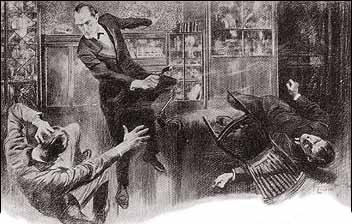
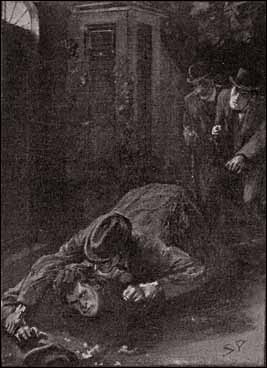
3. The Attack Dog: When he finally has the notorious Beppo cornered, Sherlock Holmes is not satisfied with any subtle or modest method of capture.  Watson claims that Beppo was perfectly intent upon and consumed with smashing his stolen statue and combing through the debris, so it is possible that the criminal could have been cornered and captured quietly, as he was outnumbered and outmaneuvered.  But instead, “With the bound of a tiger Holmes was on his back, and an instant later Lestrade and I had him by either wrist, and the handcuffs had been fastened.”  Illustrations of the scene sometimes show Holmes pinning Beppo firmly to the ground, his body sprawled entirely over him, giving no quarter.  It is no wonder that Watson describes the man as having, “...a hideous, sallow face, with writhing, furious features, glaring up at us…”  If in that position, most people would probably look similarly furious—criminal or no.
The canon is full of examples of Sherlock Holmes’s physical prowess.  He is an accomplished boxer, singlestick fighter, and fencer.  Perhaps most famous is his knowledge of the Japanese art of baritsu [sic], a skill he uses to fend off Professor Moriarty at Reichenbach Falls.  But these skills are all just part and parcel of Holmes’s personality: if something is worth doing, it is worth doing well, but also worth doing spectacularly.  Holmes could have easily taken out Moriarty with a pistol or a knife on that mountain in Switzerland, but why would he do that when he could physically clash with his archenemy, twisting him under his own hands, before throwing him, screaming, over the falls?  Holmes isn’t just a physical man—as his capture of Beppo shows—he is a dramatic one, a characteristic that is also demonstrated elsewhere in the story.
4. The Dramatist: The Great Detective has a sense of humor that could occasionally be described as “ill-timed,” or even cruel.  For example, rather than simply producing the sensitive government treaty that he had been hired to retrieve (the loss of which had driven one man to illness), Holmes requests that Mrs. Hudson hide it under a breakfast dish for their client to find (NAVA).  And while it’s been discussed elsewhere that Holmes’s “old bookseller” costume from EMPT was necessary for a number of safety and logistical reasons, the dramatic method in which he revealed himself to Watson probably was not.  Such is the case in SIXN after Holmes acquires the final Napoleon bust from Mr. Sandeford:
“When our visitor had disappeared, Sherlock Holmes’s movements were such as to rivet our attention.  He began by taking a clean white cloth from a drawer and laying it over the table.  Then he placed his newly acquired bust in the centre of the cloth.  Finally, he picked up his hunting-crop and struck Napoleon a sharp blow on the top of the head.  The figure broke into fragments, and Holmes bent eagerly over the shattered remains.  Next instant, with a loud shout of triumph he held up one splinter, in which a round, dark object was fixed like a plum in a pudding.”
I suppose a simple, “Don’t mind me, but I think a rare, stolen pearl is embedded in this plaster bust so I’m going to smash it apart with a hunting crop,” would have been out of the question here?  As Holmes once said, “I begin to think, Watson…that I make a mistake in explaining.  'Omne ignotum pro magnifico,' you know, and my poor little reputation, such as it is, will suffer shipwreck if I am so candid” (REDH).  Holmes made that statement in 1890, and by 1900 when SIXN takes place, his reputation as a dramatist is firmly established.  This goes a long way towards explaining why Watson and Lestrade are pleasantly surprised, but not shocked, by Holmes’s dramatic revelation.
5. The Peer:  And on the subject of surprises, Inspector Lestrade has one up his own sleeve before the case is over.  After enthusiastically applauding Holmes’s grand reveal and intricate explanation, Lestrade says:
“I’ve seen you handle a good many cases, Mr. Holmes, but I don’t know that I ever knew a more workmanlike one than that.   We’re not jealous of you at Scotland Yard.  No, sir, we are very proud of you, and if you come down to-morrow, there’s not a man, from the oldest inspector to the youngest constable, who wouldn’t be glad to shake you by the hand.”
What a dramatic change from some of Holmes’s earlier interactions with Scotland Yard—considering that the Detective was even once accused of stealing all the credit for solved cases from the official police (NAVA).  Furthermore, Lestrade is saying quite a bit about the Yard’s relationship with the world’s only consulting detective.  He shows that he appreciates the considerable effort that goes into Holmes’s methods—unorthodox as they may be—and he’s saying that everyone else at the Yard sees it too.  He’s recognizing the many years that he and Holmes have worked together, and that while they will never work together in an official way, that he considers Holmes an equal, if not a colleague, and that the feeling is shared by the collective force.  SIXN marks Inspector Lestrade’s last appearance in the canon (after this story, he is only mentioned in passing), making his remarks a fitting closure to his relationship with Sherlock Holmes.
6. The Heart: In her book, The Fictional 100: Ranking the Most Influential Characters in World Literature and Legend, Lucy Pollard-Gott says, “Sherlock Holmes continues to attract us, assuredly for the quality of his mind, but also for the quality of his enigmatic heart” (51).  Throughout the canon, the reader gets brief glimpses of that heart: when he is apologetic for nearly sentencing Watson and himself to a life of nightmarish madness (DEVI), and perhaps most famously when he thinks Watson’s life is compromised (3GAR).  But Holmes’s reaction to Lestrade’s compliment is equally memorable: “’Thank you!’ said Holmes. ‘Thank you!’ and as he turned away, it seemed to me that he was more nearly moved by the softer human emotions than I had ever seen him.”  The scene is made even more haunting by Jeremy Brett’s 1986 interpretation.
Sherlock Holmes may have worked more for “the love of his art than for the acquirement of wealth” (SPEC), but that does not mean he was above praise, or was not susceptible to a well-put or genuine compliment.  Lestrade’s proclamation moves him, even if it just for a moment.  Suddenly the Great Detective becomes accessible, and human.  It is extremely improbable (though I suppose, not impossible) that Holmes would ever have crossed the threshold of Scotland Yard, seeking those handshakes that Lestrade guaranteed.  But for just a moment, he seems to consider it.  For just an instant, he seems almost open to the possibility—like a regular man, who might enjoy something like that.
~~~
In SIXN, the reader experiences the many facets of Sherlock Holmes’s personality, presented on a broad continuum.  But not one of the characteristics encompasses him entirely.  It would be doing the Detective a disservice in pretending that he could be defined completely by one aspect of his character, no matter how important that characteristic may seem.  Dr. Watson presents a wide array of ways to approach Sherlock Holmes and his methods, and while that might never make him ordinary, it goes a long way towards making him accessible.
oOo
June 27 marks the beginning of the next blog contest, and this one will call on your creativity and ingenuity to win.  The prizes have arrived and I can’t wait to get started!  Watch this space for details.
If you have the means to do so, please consider purchasing a DVD copy of The Lady Shallot.  Proceeds over the next five weeks will help support a lovely family through a difficult time.  Details here

Friday, April 22, 2011

“I never can resist a touch of the dramatic” (NAVA): Sherlock Holmes and the Art of Disguise

“Ah, you rogue!” cried Jones, highly delighted. “You would have made an actor and a rare one. You had the proper workhouse cough, and those weak legs of yours are worth ten pound a week.  I thought I knew the glint of your eye, though. You didn’t get away from us so easily, you see” (The Sign of Four).
I have a confession to make.  You see, I was once completely taken in by one of Sherlock Holmes’s disguises.  There, I said it.  I don’t feel any less embarrassed for having admitted it, but still, it’s the truth.  It was my first viewing of The Adventures of Sherlock Holmes (1939), starring Basil Rathbone, and oh, how I laughed when that silly vaudeville singer came out, in his ridiculous striped jacket.  And oh, how I chuckled to myself, thinking how Sherlock Holmes would never do anything as undignified as sing, “I Do Like to Be Beside the Seaside,” while dancing merrily.  And oh, how stupid I felt when that music hall performer revealed himself as the Great Detective.  I had read the stories after all, how did I not I see this coming?  It felt a bit like being caught off-guard at Holmes making a complex deduction or lighting his pipe; at times, the disguises seem as much a part of his character as anything else.
www.basilrathbone.net
Sherlock Holmes uses the art of disguise throughout the canon, quite often and typically to great success.  On average, he appears as some form of laborer (CHAS) or as a sailor (SIGN), and even once appearing as an opium addict (TWIS); on film or television, his costumes tend to be a bit more elaborate [Note: Rupert Everett’s impressive “French ambassador” disguise in Sherlock Holmes and the Case of the Silk Stocking].   But there are three particular disguises from the canon that stand out as being unique: the old priest whom Holmes becomes to gain access to Briony Lodge and Irene Adler; the old bookseller he is dressed as when he presents himself to Watson after the Great Hiatus; and Holmes’s spy persona, the Irish-American “Altamont.”  These three instances highlight both the faults, and the intricacies of purpose, when considering this particular method in Holmes’s art of detection.
·         The Old Priest from “A Scandal in Bohemia
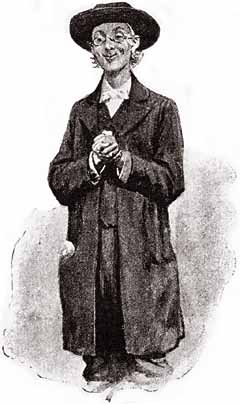
A unique disguise for Holmes if only in that it failed.  He appears in costume twice in SCAN, first as “a drunken-looking groom,” before becoming the “simple-minded Nonconformist clergyman.”  Granted it was the entire package of circumstances (the rowdy crowd, the fire scare, the smoke bomb, and the old priest) that allowed Irene Adler to realize that she had been duped.  But Holmes’s disguise didn’t serve to protect him.  He is wearing it at that famous canonical moment, when bent over to unlock the door to Baker Street, Adler saunters past (in her much more effective costume) and says, “Good-night, Mister Sherlock Holmes.”  Holmes is caught off-guard and very unsettled.  The Great Detective has been defeated, and he doesn’t even fully realize it until the next day, when he returns to Briony Lodge with Watson and the King of Bohemia to attempt to retrieve the prize.
Holmes has a laundry list of skills at his disposal, without even considering his ability to camouflage himself: analytical and deductive reasoning, physical dexterity, safe cracking and lock picking, the ability to identify 140 different types of tobacco ash (BOSC) and 42 different bicycle tire treads (PRIO).  But Holmes’s ability to disguise himself is a bit like putting on armor; it’s a skill, to be sure, but it also acts as an extra layer of protection.  Holmes appears as other people when it would be unwise to appear as himself, or when he would learn more masquerading as someone else.  The costumes shelter him from physical threat, and protect him from the possibility of failure.   
Irene Adler saw through his disguise, and she knew who he was.  She knew that she had become “an object of interest to the celebrated Mr. Sherlock Holmes.”  Sherlock Holmes wasn’t just wrong in the case of “A Scandal in Bohemia”; and he wasn’t just proven wrong by a woman.  He was proven vulnerable.
·         The Old Bookseller from “The Empty House
A unique costume for the reasons that Holmes employed it.  Ransom Riggs says, in The Sherlock Holmes Handbook: The Mysteries and Methods of the World’s Greatest Detective, “Few things are more shocking than watching one person become another” (143).  Nowhere in the canon is this more accurate than in “The Empty House.”  One moment, Watson is talking to an old bookseller who is eagerly trying to sell him copies of British Birds, Catullus, and The Holy War; he turns to examine his bookcase and when he looks back, Sherlock Holmes is smiling at him—a man who by all accounts has been dead for three years.  It’s hard to blame the Doctor for careening into a flat faint. 
Holmes gets quite a bit of grief for being needlessly cruel to his old friend in this instance, and even he terms his use of the disguise as “unnecessarily dramatic,” but there are few factors to consider before passing judgment.  While the rest of the world thinks Sherlock Holmes is dead—and that meant he could have walked down a Kensington street and not attracted any notice from random passersby—there certainly were people that were looking for the face of a dead man in the crowd.  Holmes knew that one of Professor Moriarty’s confederates, Colonel Moran, had escaped capture; and most importantly, Holmes knew that he was being watched.  In short, he is in danger, but most especially, he is a danger to others.  If he had simply strolled casually into Watson’s practice dressed as no one but himself, the apple-seller across the street may have thought little of it, but more likely, one of Moran’s associates would have attempted to cut down Holmes before he ever crossed the threshold.  And if not, Watson would have been in danger just by being in Holmes’s presence. 
So in this instance, Holmes disguises himself, not just to glean information, not just for his own protection, but for the protection of others.
·         “Altamont,” Irish-American Spy, from “His Last Bow
A unique masquerade if only in terms of sheer longevity.  In this story, which is chronologically the last of their adventures (taking place in 1914), Holmes tells Watson how he came to be a spy, under the behest of the prime minister himself: “It has cost me two years, Watson, but they have not been devoid of excitement. When I say that I started my pilgrimage at Chicago, graduated in an Irish secret society at Buffalo, gave serious trouble to the constabulary at Skibbareen…”  Michael Walsh’s short story, “The Song at Twilight,” available in the collection, Sherlock Holmes in America, provides an interesting timeline of specifics regarding Holmes’s American excursion, including the details of his induction into the Irish secret society he spoke of, how “James McKenna” became “Altamont,” and how the ghost of a past adventure influenced that change.
Altamont is also peculiar in that he is not one of Holmes’s more complicated disguises in terms of make-up and costuming.  He grows a goatee, and adopts an Irish-American accent and appropriate slang.  Both of which he apparently despises and plans to do away with as soon as possible, but a disguise for Sherlock Holmes was more than just grease-paint and fake hair.  As Watson tells us, “It was not merely that Holmes changed his costume.  His expression, his manner, his very soul seemed to vary with every fresh part that he assumed” (SCAN).  Considering this, assuming a persona for two entire years, becomes a very interesting thing indeed for Sherlock Holmes. 
In “The Song at Twilight,” Holmes outlines the assumption of his new personality: “Still, no role I had played, neither stable boy, nor wizen bookseller, nor even Sigerson—when the world, including Watson, thought me dead after Professor Moriarty’s unfortunate accident at the Reichenbach Falls—could rival my new persona…With every passing day, he was becoming more and more real to me, and there were days when I hardly thought of Mr. Sherlock Holmes of Baker Street” (336).  “Altamont” is interesting, therefore, in that he could perhaps be termed a person and not a persona; and serves to further accentuate the very dangerous games Holmes sometimes played with others, but also with himself.  
~~~
Like Inspector Jones tells him in The Sign of Four, Holmes “would have made an actor and a rare one,” and the Detective’s ability to masquerade as almost anyone provides some of the canon’s more lighthearted moments.  But as with almost everything he does, there are layers of purpose here.  He uses disguise for a myriad number of reasons—to get information, to protect himself, to protect others, and perhaps even for reasons that are beyond his own understanding.  Whatever the case, Holmes was a master at it, and even Watson never seemed to develop the ability to see through his friend’s subterfuges, no matter how many years they knew each other.  Perhaps then I’ll stop being embarrassed about my oversight in The Adventures of Sherlock Holmes.  Probably not.
oOo
A new blog contest launches this Monday, April 25!  Brush up on your Sherlock Holmes trivia, and check back here for details on how to enter and win.