Showing posts with label REDH. Show all posts

Tuesday, February 19, 2013

Currently on Twitter...


As part of an ongoing project on my Twitter feed, I'm delivering stories from the Sherlock Holmes canon in tiny installments of 140 characters or less. I recently finished up "The Retired Colourman," in which Sherlock Holmes investigates the disappearance of Mrs. Josiah Amberley, and offers a bleak outlook on human existence: "But is not all life pathetic and futile? Is not his story a microcosm of the whole? We reach. We grasp. And what is left in our hands at the end? A shadow. Or worse than a shadow – misery.”

The current story is "The Red-Headed League," in which Sherlock Holmes investigates a seemingly irreverent case, with rather more sinister designs, and in which the Great Detective reminds the reader: “I begin to think, Watson, that I make a mistake in explaining. ‘Omne ignotum pro magnifico,’ you know, and my poor little reputation, such as it is, will suffer shipwreck if I am so candid."

Check out my Twitter feed for a daily installment, although I am usually inspired to post more than once a day. And don't forget you can read through the original canon online.

Sunday, March 11, 2012

“Such as children’s toys are kept in” (MUSG): Assorted Sherlock Holmes Trappings and its Role

“And now, Doctor, we’ve done our work, so it’s time we had some play. A sandwich and a cup of coffee, and then off to violin-land, where all is sweetness and delicacy and harmony, and there are no red-headed clients to vex us with their conundrums.” (“The Red-Headed League”)

There’s little else in this world that can motivate my husband and I to clean like an unexpected visitor. It’s not that we’re untidy people per se – it’s just that we have no children, no nearby relatives, and nobody that we feel the need to impress except ourselves. All right, and maybe we’re lazy. But we can summon energy to organize and dust when properly motivated, and recently, when our oldest friends called to let us know they were in the area and stopping by for a visit – my husband’s two-year-old goddaughter in tow – well, consider us properly motivated. And this is how I found myself knee-deep in my Sherlock Holmes collection – dusting, reorganizing, tucking things away, and just generally trying to make it all look as uninteresting as possible from a toddler’s perspective.
This actually proved a more difficult task than I had imagined. There are books, of course. So very many books. Books on shelves and books in boxes; books neatly catalogued and organized, and books in towering stacks leaning up against walls. Books that I’ve read, books that I mean to read, and books that I plan to read again – if I should ever wake up to find there is another day in the week or an additional five hours in the day. There are also movies – on VHS, DVD and Blu-Ray. There might even be a few on laser disc tucked away somewhere, which I no longer have a way of viewing. There are comic books, and video games, and even a rather lovely magnifying glass for which I can neither figure out a practical daily use nor a practical way of displaying it. There’s a pewter figurine of Sherlock Holmes in an inverness cape and deerstalker hat, which the owner is supposed to paint by hand, but I lack the necessary skillset. There is even a glass bottle of green M&M candies that my husband had personalized with the Sherlock Holmes silhouette for my birthday. I tried to place the more tantalizingly colorful, breakable, and edible items up on high shelves.
But I also found several items that did not fall in any of those categories, strictly speaking. There is the Sherlock Holmes action figure, which I acquired from the online purveyor of a variety of oddities, Archie McPhee, but can also be purchased elsewhere. I use the term “action figure” relatively loosely here. Though the figure is also clad in a plastic inverness cape and deerstalker hat (the hat is removable, the cape is not), he neither moves nor is he particularly pose-able. There are, however, a removable pipe and magnifying glass that come included with the package, which I have kept obsessively sealed. Similarly, there is the set of Sherlock Holmes paper dolls, which remain likewise untouched on their shelf. The set features 60 interchangeable heads of actors who have portrayed Sherlock Holmes and Dr. Watson over the years (including the Will Ferrell/Sacha Baron Cohen venture that never quite came to fruition), as well as 10 different costumes and 4 other companions in addition to Dr. Watson (Professor Moriarty, Inspector Lestrade, Mrs. Hudson and Irene Adler). I even own two copies of the “221B Baker Street: The Master Detective Game.” One copy is still wrapped tightly in its original plastic packaging; the other copy I was convinced to open, and I have actually played, when I can find a willing companion.
But somewhere, between the matchbooks adorned with the famous Sherlockian silhouette and the Sherlock Holmes bookplates that I will never paste into books and the vintage metal bookmark in the shape of the Great Detective that’s really a little too tarnished to be considered a collectible anymore – I suddenly found myself wondering: “Why do I own this stuff, precisely?”
That’s not to say that I’m not glad that I do – own these things, that is. The first time I ever walked into the dealers’ room at my very first Sherlockian event, I think I must have had some sort of fit. I don’t remember much personally but to hear it told I just started pitching money at people in exchange for whatever I could find. My collection is not unique. It is not even particularly large in the grand scheme of Sherlockian collecting. And collections are a universal theme of most hobbies – see the “Doctor Who” fan with his own TARDIS in his living room, the “Trekkie” who built his own tricorder, or the “Star Wars” aficionado with her own wearable Stormtrooper armor. Many people seem to come equipped with that internal “collector’s alarm” that responds to one particular type of item, and when it goes off, causes the bearer lose all perspective – financial or otherwise.
Collecting makes the whole endeavor seem more tangible – gives the whole exercise substance. It’s certainly not that we’re looking for validation – no one is looking for or even requires permission – and it’s not as if owning a plastic replica of a Calabash pipe and a 1000-piece jigsaw puzzle that reveals the plot to “The Speckled Band” when assembled will provide that validation anyway. But there are only 56 short stories and 4 novels in the original Sherlock Holmes canon, as penned by Sir Arthur Conan Doyle. Collecting helps to expand the universe – extend it beyond its original boundaries. Owning these items is a reminder that there are no limitations – not really. Every book, movie, soundtrack album, and replica deerstalker only serves to contribute to the vastness of the enterprise.
The challenge, of course, will always be finding the space and the time. But as Sherlock Holmes once said, "Now, Watson…we have half an hour to ourselves. Let us make good use of it.” (The Sign of Four)
oOo
“Better Holmes & Gardens” now has its own Facebook page.  Join by “Liking” the page here, and receive all the latest updates, news, and Sherlockian tidbits.

Friday, June 10, 2011

“It was an admirable hiding-place”: The Adventure of the Six Napoleons

I gave serious thought to subtitling this post: “The Six Lives of Sherlock Holmes,” but it sounded a bit too much like a bad cable television drama for my liking, even if Sherlock Holmes himself had a well-documented appreciation of sensational literature.  Throughout the canon, Sherlock Holmes serves in many capacities, and is many things to many people.  Sometimes the list of descriptors is not so flattering, as in “The Speckled Band,” when the villainous Dr. Grimesby Roylott says to Holmes: “You are Holmes, the meddler…Holmes, the busybody…Holmes, the Scotland Yard Jack-in-office!”  On the other hand, some are flattering to the point of sounding obsequious, such as when Inspector Stanley Hopkins, in “Black Peter,” tells Holmes: “…I should never have forgotten that I am the pupil and you are the master.”
There are a multitude of planes and facets to Sherlock Holmes and his personality.  Some traits are quite clear and distinct, while some are as subtle and elusive as “trying to catch an arrow in mid-flight.”  And more often than not, many of Holmes’s characteristics are difficult to reconcile with each other, such as how a “perfect reasoning and observing machine” (SCAN) can also play his violin with the sensitivity and grace to lull his friend to sleep (SIGN).  Sherlock Holmes describes the case detailed in “The Six Napoleons” as “absolutely original in the history of crime,” but even more interesting is the variety of personality traits he presents to the reader within the tale.  Each trait is distinct and unique, but ultimately, dependent upon each other to create the complete picture of Sherlock Holmes that Dr. Watson presents in this instance.
~~~
1. The Homebody:  SIXN opens on what is actually a very charming, domestic scene: Holmes, Watson, and Inspector Lestrade seated around the fire at 221B Baker Street, smoking cigars and discussing the news and weather.  Moreover, Watson informs the reader that this is not the first such visit that the inspector has made and “It was no very unusual thing for Mr. Lestrade, of Scotland Yard, to look in upon us of an evening, and his visits were welcome to Sherlock Holmes…”  Later, before the trio ventures out on a late-night visit to Chiswick, Holmes invites Lestrade to rest on the sofa until the proper time, and it is all very friendly and comfortable, with Holmes giving off the impression of a king governing from his favorite armchair, secure in his domain.
Furthermore, Inspector Lestrade’s visits serve another purpose, in that Lestrade keeps Holmes up-to-date on the latest news from Scotland Yard and specifically, any details of the cases on which the inspector is currently engaged.  The Detective, in turn, “…was able occasionally, without any active interference, to give some hint or suggestion drawn from his own vast knowledge and experience.”  While it goes without saying that Sherlock Holmes was an incredibly active man, who would occasionally go to any extreme to solve a case, SIXN also shows the side of Holmes that was sometimes content to solve crimes from his armchair, in front of his fire.
2. The Relentless Pursuer:  One of the victims of SIXN is Mr. Horace Harker, who works for the Central Press Syndicate.  After Harker’s Napoleon bust is stolen, and a man is murdered on his front step, Holmes has Inspector Lestrade tell Harker that clearly “…a dangerous homicidal lunatic, with Napoleonic delusions, was in his house last night.”  Holmes conveys this opinion even though he personally believes no such thing.  More importantly, Holmes knows that Harker intends to write-up the story for the evening press, and now this piece of fraudulent and ill-thought-out information will likely appear in print.  When the item does indeed appear in the newspaper, Holmes famously says, “The Press, Watson, is a most valuable institution, if you only know how to use it.”  According to Leslie Klinger’s New Annotated Sherlock Holmes, this is “…perhaps the first recorded instance of deliberate manipulation of the news…” (1033).
But this is not the first example of Holmes in relentless pursuit of his own ends.  Periodically throughout the canon, Holmes has been known to impersonate a member of the clergy (SCAN), break into homes (CHAS, BRUC), and even allow a criminal to go free, if he felt the crime did not warrant whatever consequences loomed (BLUE).  He even once required Watson to serve as a makeshift jury, while he served as judge in a mock trial (ABBE).  Sherlock Holmes typically operates with his own goals and ends in mind.  Sometimes those ends work fortuitously with the goals of others, but that is merely an added bonus, rather than an intended purpose.
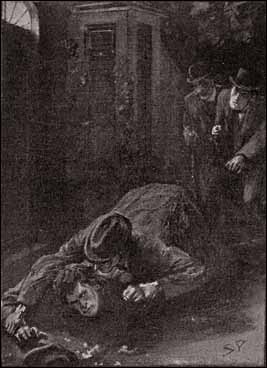
3. The Attack Dog: When he finally has the notorious Beppo cornered, Sherlock Holmes is not satisfied with any subtle or modest method of capture.  Watson claims that Beppo was perfectly intent upon and consumed with smashing his stolen statue and combing through the debris, so it is possible that the criminal could have been cornered and captured quietly, as he was outnumbered and outmaneuvered.  But instead, “With the bound of a tiger Holmes was on his back, and an instant later Lestrade and I had him by either wrist, and the handcuffs had been fastened.”  Illustrations of the scene sometimes show Holmes pinning Beppo firmly to the ground, his body sprawled entirely over him, giving no quarter.  It is no wonder that Watson describes the man as having, “...a hideous, sallow face, with writhing, furious features, glaring up at us…”  If in that position, most people would probably look similarly furious—criminal or no.
The canon is full of examples of Sherlock Holmes’s physical prowess.  He is an accomplished boxer, singlestick fighter, and fencer.  Perhaps most famous is his knowledge of the Japanese art of baritsu [sic], a skill he uses to fend off Professor Moriarty at Reichenbach Falls.  But these skills are all just part and parcel of Holmes’s personality: if something is worth doing, it is worth doing well, but also worth doing spectacularly.  Holmes could have easily taken out Moriarty with a pistol or a knife on that mountain in Switzerland, but why would he do that when he could physically clash with his archenemy, twisting him under his own hands, before throwing him, screaming, over the falls?  Holmes isn’t just a physical man—as his capture of Beppo shows—he is a dramatic one, a characteristic that is also demonstrated elsewhere in the story.
4. The Dramatist: The Great Detective has a sense of humor that could occasionally be described as “ill-timed,” or even cruel.  For example, rather than simply producing the sensitive government treaty that he had been hired to retrieve (the loss of which had driven one man to illness), Holmes requests that Mrs. Hudson hide it under a breakfast dish for their client to find (NAVA).  And while it’s been discussed elsewhere that Holmes’s “old bookseller” costume from EMPT was necessary for a number of safety and logistical reasons, the dramatic method in which he revealed himself to Watson probably was not.  Such is the case in SIXN after Holmes acquires the final Napoleon bust from Mr. Sandeford:
“When our visitor had disappeared, Sherlock Holmes’s movements were such as to rivet our attention.  He began by taking a clean white cloth from a drawer and laying it over the table.  Then he placed his newly acquired bust in the centre of the cloth.  Finally, he picked up his hunting-crop and struck Napoleon a sharp blow on the top of the head.  The figure broke into fragments, and Holmes bent eagerly over the shattered remains.  Next instant, with a loud shout of triumph he held up one splinter, in which a round, dark object was fixed like a plum in a pudding.”
I suppose a simple, “Don’t mind me, but I think a rare, stolen pearl is embedded in this plaster bust so I’m going to smash it apart with a hunting crop,” would have been out of the question here?  As Holmes once said, “I begin to think, Watson…that I make a mistake in explaining.  'Omne ignotum pro magnifico,' you know, and my poor little reputation, such as it is, will suffer shipwreck if I am so candid” (REDH).  Holmes made that statement in 1890, and by 1900 when SIXN takes place, his reputation as a dramatist is firmly established.  This goes a long way towards explaining why Watson and Lestrade are pleasantly surprised, but not shocked, by Holmes’s dramatic revelation.
5. The Peer:  And on the subject of surprises, Inspector Lestrade has one up his own sleeve before the case is over.  After enthusiastically applauding Holmes’s grand reveal and intricate explanation, Lestrade says:
“I’ve seen you handle a good many cases, Mr. Holmes, but I don’t know that I ever knew a more workmanlike one than that.   We’re not jealous of you at Scotland Yard.  No, sir, we are very proud of you, and if you come down to-morrow, there’s not a man, from the oldest inspector to the youngest constable, who wouldn’t be glad to shake you by the hand.”
What a dramatic change from some of Holmes’s earlier interactions with Scotland Yard—considering that the Detective was even once accused of stealing all the credit for solved cases from the official police (NAVA).  Furthermore, Lestrade is saying quite a bit about the Yard’s relationship with the world’s only consulting detective.  He shows that he appreciates the considerable effort that goes into Holmes’s methods—unorthodox as they may be—and he’s saying that everyone else at the Yard sees it too.  He’s recognizing the many years that he and Holmes have worked together, and that while they will never work together in an official way, that he considers Holmes an equal, if not a colleague, and that the feeling is shared by the collective force.  SIXN marks Inspector Lestrade’s last appearance in the canon (after this story, he is only mentioned in passing), making his remarks a fitting closure to his relationship with Sherlock Holmes.
6. The Heart: In her book, The Fictional 100: Ranking the Most Influential Characters in World Literature and Legend, Lucy Pollard-Gott says, “Sherlock Holmes continues to attract us, assuredly for the quality of his mind, but also for the quality of his enigmatic heart” (51).  Throughout the canon, the reader gets brief glimpses of that heart: when he is apologetic for nearly sentencing Watson and himself to a life of nightmarish madness (DEVI), and perhaps most famously when he thinks Watson’s life is compromised (3GAR).  But Holmes’s reaction to Lestrade’s compliment is equally memorable: “’Thank you!’ said Holmes. ‘Thank you!’ and as he turned away, it seemed to me that he was more nearly moved by the softer human emotions than I had ever seen him.”  The scene is made even more haunting by Jeremy Brett’s 1986 interpretation.
Sherlock Holmes may have worked more for “the love of his art than for the acquirement of wealth” (SPEC), but that does not mean he was above praise, or was not susceptible to a well-put or genuine compliment.  Lestrade’s proclamation moves him, even if it just for a moment.  Suddenly the Great Detective becomes accessible, and human.  It is extremely improbable (though I suppose, not impossible) that Holmes would ever have crossed the threshold of Scotland Yard, seeking those handshakes that Lestrade guaranteed.  But for just a moment, he seems to consider it.  For just an instant, he seems almost open to the possibility—like a regular man, who might enjoy something like that.
~~~
In SIXN, the reader experiences the many facets of Sherlock Holmes’s personality, presented on a broad continuum.  But not one of the characteristics encompasses him entirely.  It would be doing the Detective a disservice in pretending that he could be defined completely by one aspect of his character, no matter how important that characteristic may seem.  Dr. Watson presents a wide array of ways to approach Sherlock Holmes and his methods, and while that might never make him ordinary, it goes a long way towards making him accessible.
oOo
June 27 marks the beginning of the next blog contest, and this one will call on your creativity and ingenuity to win.  The prizes have arrived and I can’t wait to get started!  Watch this space for details.
If you have the means to do so, please consider purchasing a DVD copy of The Lady Shallot.  Proceeds over the next five weeks will help support a lovely family through a difficult time.  Details here. 

Friday, May 6, 2011

“The Sequence of Events as Narrated” (NOBL): Trusting Watson as Narrator in the Sherlock Holmes Canon

Sherlock Holmes was famously unappreciative of Dr. Watson’s literary efforts on his behalf.  Though it stands to reason that Watson’s published stories about Holmes and his adventures brought the Great Detective both notoriety and new clients, Holmes was more concerned about the manner in which his talents were perceived: “Detection is, or ought to be, an exact science and should be treated in the same cold and unemotional manner.  You have attempted to tinge it with romanticism, which produces much the same effect as if you worked a love-story or an elopement into the fifth proposition of Euclid” (SIGN).  But Watson was undeterred by his friend’s distinct lack of enthusiasm, and of the fifty-six short stories and four novels in the canon, only four of them are not written from the Doctor’s perspective.  “The Blanched Solider” and “The Lion’s Mane,” from The Casebook of Sherlock Holmes, are written from Holmes’s perspective; and “The Mazarin Stone” and “His Last Bow” are written from a third person perspective.  And in “The Gloria Scott,” and “The Musgrave Ritual,” Sherlock Holmes relates the primary mystery to Watson from his own memories, but the Doctor still frames and narrates the initial story.
"I was annoyed at this criticism
of a work which had been specially
designed to please him" (SIGN).
It’s quite easy to be distrustful of Watson as a narrator.  He’s often absent from the crucial aspects of Sherlock Holmes’s work—either by Holmes’s request or by the fact that he often inconveniently had his own life that kept him away from Holmes.  And as is stated in the title of James Krasner’s essay, “Watson Falls Asleep: Narrative Frustration and Sherlock Holmes,” Dr. Watson was often prone to napping at inopportune moments.  Furthermore, he seems unable to focus on the elements that a reader would, presumably, find most interesting.  As Krasner states, in his analysis of Watson’s narrative during Holmes’s famous “three pipe problem” during “The Red-Headed League”:
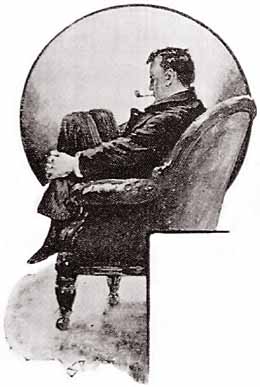
“In the course of two sentences, fifty minutes have passed, yet all the reader receives, and all Watson seems to think about, are the particulars of Holmes’s odd physical position on the couch.  Rather than speculating about Holmes’s thoughts, or about the case, Watson apparently just sits and stares at Holmes.  While a more imaginative narrator, or one more interested in intellectual acts, might speculate on Holmes’s thought process, Watson just gazes at Holmes’s body until the sight puts him to sleep.”
It’s hard to forget that Dr. Watson is oftentimes the reader’s only access to Sherlock Holmes.  He is the one that introduces the audience to the Detective, and Dr. Watson is the one that parcels out information in whatever size literary morsels he deems fit.  And Krasner believes that this is sufficient reason for the reader to be resentful, or even angry, at the Doctor, because “…just when Holmes is at his most brilliant, Watson turns his gaze to the angle of his pipe or the color of his dressing gown.”  But as a writer and a reader himself, Watson was uniquely aware that the building blocks of a narrative are contained, not just within each individual story as it is told, but across the series of stories that will ultimately be conveyed. 
In A Study in Scarlet, Watson introduces the reader to Sherlock Holmes for the first time.  From the manner in which he chooses to title his very first chapter (“Mr. Sherlock Holmes”), the reader is instantly aware around who this narrative will focus, at who the reader’s attention should be intrinsically drawn.  I’ve spoken elsewhere of Holmes and Watson’s first meeting, and how the scene forever colors the ways we perceive both men.  When Watson first sees Holmes, he is alone and consumed by his work, much as Sherlock Holmes will always be throughout their partnership.  Furthermore, Watson states that Holmes shook “…my hand with a strength for which I should hardly have given him credit.”  With this statement, Watson lays the foundation of Sherlock Holmes as a man of mysterious and unassuming strength.  This characteristic may not manifest itself to its fullest extent in STUD, but it becomes a brick upon which Watson can build off of in other stories.  In “The Speckled Band,” Holmes untwists the cast-iron fireplace poker which the villainous Roylott had destroyed (“I am not quite so bulky, but if he had remained I might have shown him that my grip was not much more feeble than his own”); and in “The Three Gables,” Holmes easily fends off an aggressive and agitated prizefighter (“But he is really rather a harmless fellow, a great muscular, foolish, blustering baby, and easily cowed, as you have seen”).  Watson started weaving the fabric of this aspect of Holmes’s character in the very first story, in the very first chapter, even though he did not use it to its fullest ability until later in the canon.
And Watson is not just aware of how to present Holmes’s skills as a detective, but also aspects of his personality—those particularly enticing clues that so tantalize the reader.  In “The Naval Treaty,” a story from The Memoirs of Sherlock Holmes, the Detective delivers a seemingly uncharacteristic, philosophical soliloquy on the nature of—of all things—flowers:
“What a lovely thing a rose is! […]There is nothing in which deduction is so necessary as in religion…It can be built up as an exact science by the reasoned.  Our highest assurance of the goodness of Providence seems to me to rest in the flowers.  All other things, our powers, our desires, our food, are all really necessary for our existence in the first instance.  But this rose is an extra.  Its smell and its colour are an embellishment of life, not a condition of it.  It is only goodness which gives extras, and so I say again that we have much to hope from the flowers.”
It’s certainly an odd tangent for a man who once claimed to not know that the sun revolved around the earth, simply because the information was not relevant to his work (STUD).  What use could philosophy and existential meditations on nature have in Holmes’s often vaunted “Science of Deduction”?  But if nothing else, this monologue puts softer edges on the detective, making him seem more human and aware of life’s delicate—often superfluous—details; things that are good, simply for the sake of being good.  And so the path is paved for Watson to present the reader with an entirely different aspect of Sherlock Holmes, one that isn’t much seen until “The Three Garridebs,” when Watson is injured.  Holmes shouts, “You’re not hurt, Watson?  For God’s sake, say that you are not hurt!” and perhaps there is a subtle reminder of the Detective from NAVA, who spoke so eloquently about the goodness of “extras,” and the reader wonders if the Doctor is not an “extra” himself, or perceived as one, in some way.
In short, Watson knows exactly what he’s doing as a narrator, and a writer.  He may not always be present—or even awake—when the reader would like him to be, but he sees the larger picture and understands what he needs to do.  In MAZA, Holmes tells his biographer: “Watson…you have never failed to play the game.  I’m sure you will play it to the end.”  Particularly in the very early stories, Watson is constantly leaving clues and signs that lead the readers on the path to Sherlock Holmes’s true nature, making the definitive character of the Great Detective as much of a mystery or a challenge as any of the canon’s adventures.
oOo
There are two weeks left to enter the Sherlock Holmes trivia contest, and now, there’s a new way to win!  Win a prize package of reference works by showing off your knowledge of the Detective, his world, and his creator.