Sunday, January 8, 2012

“But no heroes, returning from a forlorn hope…” (VALL): The Nature of Heroism in the Sherlock Holmes Canon

“It is simple enough as you explain it,” I said, smiling. “You remind me of Edgar Allan Poe's Dupin.  I had no idea that such individuals did exist outside of stories” (A Study in Scarlet, Chapter Two).

Sherlock Holmes: “Don't make people into heroes, John.  Heroes don't exist and if they did I wouldn't be one of them.” (SHERLOCK, “The Great Game,” 2010)


In his recent graphic novel, Moriarty: The Dark Chamber, writer Daniel Corey re-envisions the world of Sherlock Holmes – a world in which, for all outward appearances, Professor Moriarty had defeated the Great Detective at Reichenbach Falls.  The world of The Dark Chamber is one in which Sherlock Holmes has been dead for over two decades, and Moriarty is living in relative seclusion, seemingly unable to match the excitement of the days when he clashed with his greatest adversary.  However, this Moriarty is no gloating victor – looming malevolently from the center of his criminal spider’s web, and mocking those who remain of Holmes’s confederates.  And so, I was rather surprised to find there were some who took issue with the graphic novel, and with the idea of Professor Moriarty as a “heroic figure.”  You see, I didn’t find Corey’s Moriarty heroic at all, instead I found him rather sad and tired, even if the artwork rendered him less reptilian than I had come to expect from the Napoleon of Crime.


But it got me thinking about the heroes of the Sherlock Holmes canon, and who they really are.  Beginning at the beginning, there’s the Great Detective himself, of course, and as the original definition of “hero” typically only applied to the demigods of Greek myth, than this use of the term might be more appropriate than it even initially appears to be.  After all, Steven Moffat, creator of the television show, SHERLOCK, said: “…Sherlock Holmes is a man who aspires to be a god.”  Certainly, throughout the course of the stories, Sherlock Holmes sometimes acts in ways that could be classified as less-than-heroic, if not flat-out illegal.  He disguised himself as a member of the clergy, participated in numerous instances of breaking and entering, and even contrived an engagement to a housemaid in order to obtain information – just to name a few.  Taken out of context, any one of those acts would be enough to make a lesser fictional character seem less than honorable, less than likeable.  But readers continue to stand behind Sherlock Holmes because he always obeys the spirit of the law, if not the letter of it.  As the Detective says in “The Adventure of the Three Gables,” “I am not the law, but I represent justice so far as my feeble powers go.”
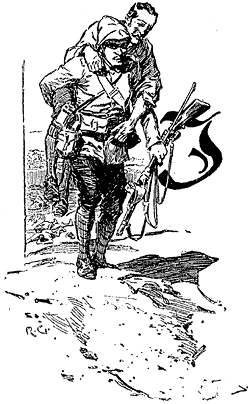
And of course, we can’t forget Dr. Watson, who more than aptly fulfills the later “heroic” definitions of self-sacrifice, martial courage, and moral excellence.  Watson is a soldier, injured in the service of his country, and so it’s more than fair to say that his sense of self-sacrifice is beyond reproach.  Moreover, throughout the canon, Watson repeatedly demonstrates a uniquely honed sense of morality and honor.  Occasionally, he requires a little convincing, and even prodding to get onboard with some of the Detective’s schemes.  In “The Bruce-Partington Plans,” Watson meets Holmes at Goldini’s Restaurant, having brought along the parcel of housebreaking tools that Holmes requested.  After being informed of the plan, and a few moments of trying to convince Holmes to use somewhat more legal channels, Watson still expresses his misgivings: “I don’t like it, Holmes.”

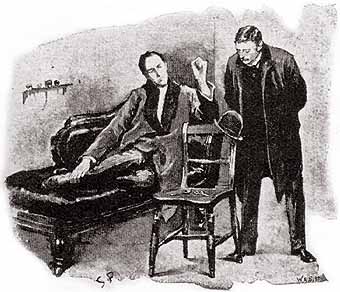
Holmes almost seems taken aback by his friend’s reticence and he lobbies hard for Watson’s presence: “My dear fellow, you shall keep watch in the street.  I’ll do the criminal part.  It’s not a time to stick at trifles.  Think of Mycroft’s note, of the Admiralty, the Cabinet, the exalted person who waits for news.  We are bound to go.”  Of course, the Doctor would never willingly leave his friend to walk into danger alone, and it is this courage that prevents Watson’s heroic characteristics from crossing the line into boring and two-dimensional.  He is a man that is familiar with danger and ambiguous legalities, even wielding a chair as a weapon in “Charles Augustus Milverton.”  But his heroism is rooted in his ability to see where the boundaries are, and decide for himself when he can and should cross them. 

“I knew you would not shrink at the last,” said he, and for a moment I saw something
in his eyes which was nearer to tenderness than I had ever seen.
(via bookishadventures.tumblr.com)
And finally, what of Professor Moriarty?  Could it really be said that there is even anything, remotely heroic about the Napoleon of Crime?  I certainly would not go so far as to say that Sherlock Holmes should have looked to Moriarty in a pinch, but the argument could made that there is something rather protective about the man, which is certainly part and parcel with being a heroic figure.  In “The Norwood Builder,” the Detective says, “From the point of view of the criminal expert, London has become a singularly uninteresting city since the death of the late lamented Professor Moriarty.”  The Professor’s mere existence certainly protected Sherlock Holmes from his own sense of boredom, and his relentless and sometimes dangerous pursuit of more and more interesting work.  Furthermore, Moriarty had a very clear sense of his own boundaries, of what was his, and how to protect it.  As the Professor tells Sherlock Holmes in “The Final Problem”:

“You crossed my path on the fourth of January.  On the twenty-third you incommoded me; by the middle of February I was seriously inconvenienced by you; at the end of March I was absolutely hampered in my plans; and now, at the close of April, I find myself placed in such a position through your continual persecution that I am in positive danger of losing my liberty.  The situation is becoming an impossible one.”

Like Dr. Watson, Professor Moriarty has a clearly defined set of boundaries and limitations that he works very hard to protect.  They might not be respectable boundaries, or even legal ones, but they are set nonetheless and all his efforts are directed towards them.  Such a single-minded focus could possibly be viewed as heroic.  Most readers view Sherlock Holmes’s single-mindedness in much that fashion.

In the short story, “Be Good or Begone,” by Stan Trybulski, Sherlock Holmes has an innocent man savagely beaten by a corrupt police inspector simply because, “…I didn’t like his face.”  Now, Trybulski’s Sherlock Holmes contains more than a few elements of a golden age detective, and often seems less like the Victorian gentleman with which most readers are familiar.  Indeed, in the story, Holmes engages in a litany of strange behavior, from heroin use to vegetarianism, but none of it strikes a discordant note quite like the unprovoked beating of the innocent man.  If perfectly spotless behavior and a constant respect for the confines of the law are what truly define a hero, then Sherlock Holmes wasn’t one.  But instead, readers know what they can expect from Sherlock Holmes – and Dr. Watson and Professor Moriarty, for that matter.  We know what lines they will and will not cross.  We know where they stand, and that’s why we feel that we can stand beside them.


oOo

“Better Holmes & Gardens” now has its own Facebook page.  Join by “Liking” the page here, and receive all the latest updates, news, and Sherlockian tidbits.

Sunday, January 1, 2012

BOOK REVIEW: “An Entirely New Country: Arthur Conan Doyle, Undershaw and the Resurrection of Sherlock Holmes”

Alistair Duncan; Publisher: MX Publishing (December 2011)
“A snapshot is a very revealing thing… For in the day-to-day, the minutiae, much is revealed: the domestic arrangements of [Arthur Conan] Doyle’s butler which may have influenced the creation of the Barrymores from ‘Hound of the Baskervilles’; the bizarre Sculptograph machine (and its unhappy sequel) invented by a man named Bontempi and from which ‘The Six Napoleons’ may have sprung…” (Mark Gatiss)
“Sherlock Holmes began life as a character in fiction. He then became a national institution. He may become a solar myth.” (The Daily Express, March 25, 1902)
In an article entitled, “An Intimate Study of Sherlock Holmes,” which appeared in Detective Story Magazine on January 15, 1918, Sir Arthur Conan Doyle remarked on the variable nature of his most famous creation: “I never realized what an actual living personality Mr. Holmes was to many people until I heard the very pleasing story of the char-à-banc of French schoolboys on a tour to London, who, when asked what they wanted to see first, replied unanimously that they wanted to see Mr. Holmes’ lodgings in Baker Street.”  Likewise, it is easy to feel that Doyle himself has grown to mythic proportions—a legendary man who created an equally legendary character, but who also existed in a very narrow scope and did not live in any real way.  Thankfully, Alistair Duncan’s grand and ambitious book—An Entirely New Country: Arthur Conan Doyle, Undershaw and the Resurrection of Sherlock Holmes—makes Doyle accessible again.  Duncan paints the picture of a man who was both brilliant and revolutionary, as well as entirely too human and fallible.
Alistair Duncan is the author of three previous works on the world of Sherlock Holmes and his creator.  His most recent work, The Norwood Author: Arthur Conan Doyle and the Norwood Years (1891-1894), also a biographical work, depicts the years of Doyle’s life leading up to the construction of Undershaw and the establishment of the household there.  An Entirely New Country opens with the Doyle family’s nomadic years after leaving South Norwood, continuing on to the opening of Undershaw in 1897, and concludes with Arthur Conan Doyle starting a new life and leaving Undershaw in the hands of tenants in 1907.  Duncan’s portrait of these years is comprehensive, uncompromising, and extremely readable.
Doyle experienced some of the most significant moments of his life during his time at Undershaw.  His wife, Louise Conan Doyle, passed away from a long illness—having survived far past her original grim prognosis largely due to her husband’s attentiveness to her health.  Subsequently, after her death, Doyle was finally able to propose to and marry Jean Leckie, with whom Doyle had been conducting what he certainly thought was a clandestine—while ostensibly platonic—affair of many years.  Although Duncan correctly points out that Doyle was operating under serious delusions if he thought that his family and friends—his wife included among them—were entirely blind as to the true nature of his feelings for Jean Leckie (180).
Furthermore, it was while at Undershaw that Doyle received a knighthood for his services to the British Empire during and after the Boer War.  At issue was Doyle’s extreme uneasiness with accepting the honor, and only acquiesced due to a desire to refrain from insulting King Edward, rather than any real desire for recognition.  According to Duncan, Doyle was finally able to vent his frustration over the situation with the publication of “The Three Garridebs,” where Dr. Watson mentions that Sherlock Holmes himself had declined a knighthood in June 1902. “The date was a clear reference to Conan Doyle’s own knighthood and, given his volatile relationship with his most famous character, it is possible that he rather enjoyed depriving Holmes of such an honor” (174).
And in regards to Doyle’s most famous creation, his time at Undershaw saw significant moments in the chronicles of Sherlock Holmes.  William Gillette’s play, featuring Doyle’s creation, premiered both in the United States and in London, with much success.  In 1901, readers saw the Great Detective resurrected with The Hound of the Baskervilles.  But it was a tenuous resurrection, as most Sherlockians know, as HOUN is set chronologically prior to the events of “The Final Problem,” and Holmes’s death at Reichenbach.  More significantly however, in 1903, Doyle accepted a commission from the American magazine, “Collier’s Weekly,” to write eight new Sherlock Holmes stories, for which he received $35,000 (American rights only).  Sherlock Holmes began to live again while at Undershaw, although it would seem that Doyle looked to every new story as if it would be the Detective’s last adventure, or so he hoped (187).
Sir Arthur Conan Doyle often seems to be as much of an enduring icon as the character he created—timeless, mythic, even larger-than-life.  Alistair Duncan strips all of that away, and reveals someone who was very real, and lived in a very human way.  He had very real failings, and very human desires and insecurities.  And if Doyle’s reasons for resurrecting Sherlock Holmes were purely fiscal, rather than fanciful, then Duncan helps his reader to accept those reasons.  For it doesn’t matter why Doyle chose to resurrect Sherlock Holmes, it only matters that he did.  By focusing solely on Sir Arthur Conan Doyle’s years at Undershaw, Alistair Duncan provides the necessary framework and context to some of Doyle’s most significant moments and decisions.  The specificity of his project was ambitious, but Duncan fulfilled those demands and expectations in spades.
oOo
Reviews of Alistair Duncan’s previous works are available here.  You can also follow the author on his blog, or on Twitter. Alistair Duncan's books are available for purchase from MX Publishing.
Learn more about the campaign to preserve Undershaw.  You can also support their efforts by following them on Facebook and Twitter.
“Better Holmes & Gardens” now has its own Facebook page.  Join by “Liking” the page here, and receive all the latest updates, news, and Sherlockian tidbits.
Monday, December 12, 2011

Currently on Twitter...

As part of an ongoing project on my Twitter feed, I'm delivering stories from the Sherlock Holmes canon in tiny installments of 140 characters or less.  Last week, I finished up "The Blue Carbuncle," and I hope you enjoyed this seasonal tale, which Christopher Morely once described as: "Surely one of the most unusual things in the world: a Christmas Story without slush." 

The current story is "The Adventure of the Copper Beeches," and I wonder if you will agree with Sherlock Holmes when he says: "I confess that it is not the situation which I should like to see a sister of mine apply for."

Check out my Twitter feed for a daily installment, although I am usually inspired to post more than once a day.  And don't forget you can read through the original canon online.

Sunday, December 4, 2011

Sherlock Holmes on Screen: “The Pearl of Death” (1944)

“Gentlemen,” he cried, “let me introduce you to the famous black pearl of the Borgias…it is the most famous pearl now existing in the world, and it has been my good fortune, by a connected chain of inductive reasoning, to trace it from the Prince of Colonna’s bedroom at the Dacre Hotel, where it was lost, to the interior of this, the last of the six busts of Napoleon which were manufactured by Gelder & Co., of Stepney.  You will remember, Lestrade, the sensation caused by the disappearance of this valuable jewel, and the vain efforts of the London police to recover it.  I was myself consulted upon the case, but I was unable to throw any light upon it.” (“The Six Napoleons”)

Outside of his 1939 production of “The Hound of the Baskervilles,” the Sherlock Holmes films starring Basil Rathbone were only tangentially linked to the stories of the canon, at best.  In many instances, Sir Arthur Conan Doyle’s original stories could be more accurately viewed as source material, rather than any real type of blueprint.  They provided a framework, not any real form.  But in 1944’s “The Pearl of Death,” when Basil Rathbone’s Sherlock Holmes advises Nigel Bruce’s Dr. Watson against hitting newspaper reporters in the teeth (an affectionate, though misguided, attempt at defending the Detective’s honor), there is more than an echo of Holmes’s original sentiment: “The Press, Watson, is a most valuable institution, if you only know how to use it."

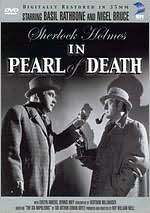
Image via www.sherlockholmesposters.com.
“The Pearl of Death” also marked the introduction of a new adversary for the Great Detective, provided by Universal Pictures in the form of Giles Conover, the jewel thief.  Perhaps the studio felt that audiences had seen enough of Professor Moriarty, but unfortunately Conover embodies many of the Professor’s most prominent characteristics anyway.  According to Sherlock Holmes, “This man pervades Europe like a plague, yet no one has ever heard of him.  That’s what puts him on the pinnacle in the records of crime.  In his whole diabolical career the police have never been able to pin anything on him.  Yet give me a crime without motive, robbery without a clue, murder without trace, and I’ll show you Giles Conover.”  This description is, of course, taken almost verbatim from the Great Detective’s description of Moriarty in “The Final Problem.”

That is not to say, however, that Conover—played by Miles Mander—is not a suitably diabolical figure.  Indeed, the audience’s first glimpse of Conover is quite ominous; he looms menacingly in the back of a darkened car, cloaked in shadow, waiting for his associate Naomi Drake (played by Evelyn Ankers).  In many ways, this scene echoes how the audience would first view Professor Moriarty in the 2009 Warner Bros. movie.  In that film, as Moriarty sits with Irene Adler (played by Rachel McAdams), he is seen mostly in darkness, only a cuff and coat sleeve visible, and lurking in the back of a carriage.  Both Adler and Drake appear to school their nerves in the presence of their intimidating companions, but there is an unmistakable undercurrent of terror that they cannot quite conceal, and which feeds the audience’s perception of the villains.
Another interesting addition to this film was the character known only as “The Creeper,” (played by Rondo Hatton).  The Creeper is a silent, lurking, violent killer, whose distorted features only serves to heighten his chilling presence.  Hatton suffered from acromegaly, a pituitary disorder, which caused his disfigurement.  But this fearsome hooligan, who serves Conover and is responsible for almost all of the violence to person and property throughout the film, stands in the place of a character from the source material.  As Dr. Watson describes the photograph of Beppo: “It was evidently taken by a snapshot from a small camera.  It represented an alert, sharp-featured simian man, with thick eyebrows and a very peculiar projection of the lower part of the face, like the muzzle of a baboon.”  And when Beppo is captured:  “As we turned him over I saw a hideous, sallow face, with writhing, furious features, glaring up at us, and I knew that it was indeed the man of the photograph whom we had secured.”  The Creeper is no more peaceful than Beppo in resolving his affairs in “The Pearl of Death,” and the character would later appear in two more films, unrelated to Sherlock Holmes.

According to David Stuart Davies, author of Starring Sherlock Holmes: A Century of the Master Detective on Screen, this particular Sherlock Holmes film by Universal was significant in other respects:

“'The Pearl of Death' is noteworthy in that it really saw the transition of Rathbone and Bruce into the characters they were playing.  Universal practically eliminated the names Holmes and Watson from their advertising from this film onwards.  Typical blurbs now ran: ‘Basil Rathbone and Nigel Bruce Crack the Mystery of The Pearl of Death’ or ‘Rathbone & Bruce – The Masterminds Tackle The Master Crimes’.  The names and identities of the actors had become so synonymous with those of the characters they were playing that as far as Universal was concerned—and the public too—using one name was as good as another” (57).

Of course, “The Pearl of Death” also features the ceramic busts of Napoleon, their methodical destruction, and the valuable pearl hidden inside one of them, in addition to new archenemies and their fearsome companions.  The film also deviates in important ways.  But the manner in which the film hearkens back to its source material is suggestive.  When Watson asks Holmes if he is certain that the missing pearl is inside the final bust, Holmes dismissively says: “If it isn’t, I shall retire to Sussex and keep bees.”  Such is typical of the type of tributes an avid Sherlock Holmes fan would find in “The Pearl of Death.”  While some of Universal’s Sherlock Holmes films seem to hearken back to the original stories in terms of only one plot point, character, or narrative device, this film seems to recognize the spirit of the original SIXN, and seeks to embody it globally.

oOo

“Better Holmes & Gardens” now has its own Facebook page.  Join by “Liking” the page here, and receive all the latest updates, news, and Sherlockian tidbits.

Friday, November 25, 2011

“…a group of people who seemed to be intensely amused by the situation” (BLAN): The Nature of the Sherlockian Gathering

“We’re more than reality, you and I…you, my friend, have made us immortal.” (Clive Merrison, as Sherlock Holmes)
I have my nose nearly pressed up against a display case at the Lilly Library, trying not to breathe clouds of condensation onto the glass.  “That…that…that is just…” I stutter, struggling for words.  “That is just spectacular,” I finally announce to the room at-large, and the few people around me murmur in agreement.  We are all exhibiting a similar posture—trying to get as close to the case as possible, without smearing the glass with fingerprints.
“I know, isn’t it?”  Ginger sidles up beside me, and peers down appreciatively into the case.  “It’s just magnificent.  I wish I could put my hands on it.”
“Far be it from me to interrupt you two,” Darlene mutters from behind us.  “But you do know that there is a copy of the Gutenberg Bible sitting just to your right?  Just turn your head slightly, and you’ll see it.  Right there.  Gutenberg Bible.”
I glance back at her, and then back down again at the original “Elementary, My Dear Data,” script sitting in the case before me.  “My priorities are where I want them to be, thank you.”
“Well, as long as we’re all in agreement,” Darlene says with a smile.  “Now, shove over.  I want to see too.”

"Gillette to Brett" attendees viewing rare items in the Lilly Library collection.
(Photo via Wessexpress.com)
The weekend of November 11-13 marked the third incarnation of Wessex Press’s seminal “Gillette to Brett” conference, which highlights the various incarnations of the Great Detective on stage and screen.  Distinguished presenters included: actor Curtis Armstrong, editor and scholar Leslie Klinger, BBC radio producer Bert Coules, and authors Tony Earnshaw, Henry Zecher, and Michael Hoey (son of character actor, Dennis Hoey, who appeared as Inspector Lestrade in the Universal Sherlock Holmes films).  The event was capped off with the 35th anniversary screening of “The Seven-Per-Cent Solution,” with introductory remarks by author and screenwriter Nicholas Meyer.  Presentations were punctuated by film screenings and networking opportunities.  Throughout the conference, at meals and huddled in the Dealer’s Room, conversations centered on the various persons who have had the opportunity to portray Sherlock Holmes and Dr. Watson, and the various types of media in which they been portrayed. 

However, the conference’s theme seemed to center around one of Curtis Armstrong’s early remarks: “Anyone can play Hamlet…Keanu Reeves played Hamlet…but Sherlock Holmes requires a gift which is not given to many.”  Because more than anything I learned that weekend in Bloomington, Ind., I learned that studying Sherlock Holmes requires a keenness that is not given to many.  For instance, Henry Zecher’s impressive and monumental biography, William Gillette, America’s Sherlock Holmes, which is nearly 750 pages of exhaustive research and was therefore too large to fit into my carry-on bag, demonstrates a depth and an enthusiasm of subject, which was mirrored in his presentation.  Another point of fervent conversation regarded the various adaptations’ attentiveness and adherence to the minute details of the canon: where Peter Cushing was forced to deviate from his original vision for Hammer Films’ version of “The Hound of the Baskervilles;” and conversely, how Bert Coules worked tirelessly to create the first complete rendering of the canon using the same two actors (Clive Merrison as Sherlock Holmes, and Michael Williams as Dr. Watson).  Furthermore, Michael Hoey’s stories of his time on the Universal Sherlock Holmes set with Basil Rathbone, Nigel Bruce, and his father, have lost none of the childlike wonder and appreciation which he must certainly felt as a young boy, surrounded by such giants of the industry.
But that, I think, is part of the nature of being a Sherlockian, too.  We do not, and cannot afford to, lose our childlike wonder at the subject that so gripped our hearts as children, as young people, or even as grown adults.  As I sat in the Lilly Library, viewing a presentation of some the collection’s rarer pieces, the gasps and murmurs of appreciation grew louder and more pronounced with each new treasure—a copy of Edgar Allan Poe’s “Tamerlane,” a rare printing of Chaucer’s “Canterbury Tales,” pages from that Gutenberg Bible that had failed to catch my eye earlier, but which were now given to the audience to touch.  But when the librarian presented one of the Lilly Library’s two copies of the 1887 “Beeton’s Christmas Annual,” the intakes of breath took on such a sharp edge that I began to worry that the audience as a whole was going to gasp itself into suffocation.  I wondered briefly if the librarian knew CPR, but lost the thought when he revealed an original print of the Declaration of Independence.

Author and screenwriter Nicholas Meyer (left) with
"Gillette to Brett" co-creator Steven Doyle.
(Photo via Wessexpress.com)

“Education never ends, Watson,” Sherlock Holmes says in “The Red Circle.”  “It is a series of lessons with the greatest for the last.”  And after meeting some of the presenters and authors in attendance at “Gillette to Brett,” I realized just how many Sherlockians hold this axiom close to heart.  I had the opportunity to meet and speak with Dan Andriacco, and Kieran McMullen, two MX Publishing’s authors.  Andriacco is the author of Baker Street Beat, and No Police Like Holmes; McMullen is the author of Watson’s Afghan Adventure and Sherlock Holmes and the Irish Rebels.  And they are both enthusiastic devotees of Sherlock Holmes, as enamored of their chosen subject today, as they were when they first began.  They are always learning, constantly thinking, and most importantly, they want to be a part of the conversation—not just start it.  Sherlockians want to discuss everything from bourbon, to period weaponry, to the finer points of rare pastiches—as long as it all relates back to the root discussion.  The desire to talk about the thing we love, with others who love it, should not fade, but only grow stronger with time.  This is, after all, why conferences such as “Gillette to Brett” exist, and why they continue to exist.  It is also why Sherlockians continue to seek each other out, and hopefully will always do so.
oOo
“Better Holmes & Gardens” now has its own Facebook page.  Join by “Liking” the page here, and receive all the latest updates, news, and Sherlockian tidbits.
Tuesday, November 15, 2011

“The Meaning of This Extraordinary Performance” (COPP): Granada Television’s “The Musgrave Ritual”

“One morning, as I approached the entrance to the Granada studios, Jeremy arrived in a cab.  As he leant forward on the pavement to pay the driver, the waistband of his well-worn, much-laundered white trousers parted company with the legs which fell in a heap on the kerb.  Giggling, Jeremy pulled them back up and struggled to the safety of the wardrobe, where his laughter could be heard as far away as Liverpool.  His laugh was always infectious.  When I think of Jeremy, I think of his laughing... that will always be my lasting memory of him.  I cannot pay him a greater compliment” (Edward Hardwicke).

November 3 recently marked what would have been the 78th birthday of Jeremy Brett, who was born Peter Jeremy William Huggins in 1933. He starred as Sherlock Holmes in the Granada Television series, appearing in 41 episodes as the Great Detective.  Brett looms large over the role of Sherlock Holmes, and casts a very long shadow over all the actors who have played the part.  Even Benedict Cumberbatch, star of the new BBC series “Sherlock,” said in an October 2010 interview: “[Brett] casts a towering shadow.  He was a friend of my mom's, and he was around our family a lot.  He and the part collided, and he let it take him over.  He was a manic depressive, but that was a side issue, but he then played one.”

The immense range of performance that Jeremy Brett brought to the role of Sherlock Holmes is thrown in to sharp relief in Granada Television’s adaptation of “The Musgrave Ritual.”  This particular episode manages to contain some marked deviations from the original source material, but also somehow, remain remarkably faithful and familiar.  As has been discussed elsewhere, the primary mystery of “The Musgrave Ritual” originally takes place before Sherlock Holmes and Dr. Watson first meet.  The actual narrative of story is told by Sherlock Holmes to Dr. Watson, with Watson relaying the telling of that tale to his readers.  MUSG has been dated by both William Baring-Gould and Leslie Klinger as taking place in 1879, which would have made the Great Detective around 25-years-old.  In other words, the Sherlock Holmes of the original MUSG was quite a young man.

Unfortunately, when Jeremy Brett and Edward Hardwicke filmed Granada’s version of MUSG in 1986, neither man could be quite honestly classified as “young.”  At the time of filming, both Brett and Hardwicke were approximately 53-years-old, and so therefore, the production team’s first obstacle was how to compensate for their stars’ somewhat advanced age.  Furthermore, it simply would not do to film an entire episode with Watson appearing only briefly at the beginning, and perhaps at the end.  That is, it would not do to exclude Watson intentionally, as some casting and plot allowances were made in later Granada episodes for Brett’s health troubles, and Hardwicke’s scheduling conflicts.

So Granada’s 1986 episode of MUSG opens with both Sherlock Holmes and Dr. Watson perched on the back of a cart, on their way to a brief holiday at Musgrave Manor.  Holmes is wrapped in several layers of clothing, including a ratty crocheted blanket, and is coughing pitifully (and melodramatically) every time Watson tries to cheer him with the thought of the entertainments that await them.  On the cart with them is a heavy, locked trunk, which Holmes reveals to contain notes on some of his earliest cases:  “…the record of the Tarleton murders, the case of Vamberry, the wine merchant, and the adventure of the old Russian woman, a full account of Ricoletti of the club-foot, and his abominable wife, and the singular affair of the aluminum crutch…that was something a little recherché.”  Unfortunately, the moment Dr. Watson expresses interest in reading these notes, Holmes slams his foot down upon the lid and begins to use it as a footstool.


And so, from the very beginning, Granada’s adaptation of MUSG both deviates from the original story, and at the same time reaches out to its source.  Many plot details remain the same: Reginald Musgrave, whom Sherlock Holmes always associated “…with gray archways and mullioned windows and all the venerable wreckage of a feudal keep”; Musgrave’s brilliant butler, Brunton; his tumultuous relationship with the housemaid, Rachel; and of course, the ancient Musgrave family ritual.  According to Richard Valley:

“When it came time to remake the story for Granada’s THE RETURN OF SHERLOCK HOLMES, dramatist Jeremy Paul found that it was again necessary to make some minor changes, this time because no suitable location could be found containing the trees essential to the untangling of the puzzle.  The solution: a tree-shaped weathervane atop Hurlestone Manor.”


But the most significant divergence comes relatively early on in the episode, after Watson arrives at Holmes’s room to collect him for dinner.  Holmes is nowhere to be found, but the tempting trunk of early case notes is prominently displayed.  But just as Watson is about sneak a quick peek, the Doctor also spies Holmes’s open morocco case, the needle and cocaine solution prepped for dosage.  The scene ends with Watson looking pensive, but ultimately saying nothing.  Holmes spends the following scenes, and the rest of the evening, being easily coaxed into maniacal, uncontrollable laughter.  Sometimes giggling privately under his breath as he warms himself in front of the fireplace, sometimes flinging himself bodily around the room—laughing in a powerful way that seems to make both Musgrave and Brunton uncomfortable, while Watson tries desperately to simultaneously ignore Holmes and distract the other men.


Finally, at the end of the episode, as Holmes and Watson drive away, it is the Doctor who posits the theory that perhaps Rachel Howells may have intentionally sent the stone crashing, and also the alternate hypothesis that she had “only been guilty of silence as to [Brunton’s] fate.”  Holmes seems uncharacteristically indifferent about this loose thread and says, “Very probably she's far away from Hurlstone now and carries her secret with her.”

Surprisingly and unfortunately, Holmes is wrong.  In the final scene, the pale, waterlogged face of Rachel Howells’s corpse rises up from the mere.  Her romantic rival, Janet Tregellis, recoils in horror at the sight, and runs away screaming in terror.  This final scene brings closure to a plot point that Sir Arthur Conan Doyle had originally left open—whatever happened to Rachel Howells?  But this addition on Granada’s part in no way seems like a correction, or an admonition directed at Doyle for leaving a question unanswered.  Instead, it seems like one last accommodation, a last tribute to the original story that was flexible enough to meet the needs of an evolving cast and crew, which was able to stretch enough to meet in the middle between canon and canonization.

oOo

“Better Holmes & Gardens” now has its own Facebook page.  Join by “Liking” the page here, and receive all the latest updates, news, and Sherlockian tidbits.
Sunday, November 13, 2011

Currently on Twitter...


As part of an ongoing project on my Twitter feed, I'm delivering stories from the Sherlock Holmes canon in tiny installments of 140 characters or less.  Last week, I finished up "The Devil's Foot," and I wonder if you agree with the Great Detective's own personal assessment of the case: "...strangest case I have handled."

The current story is "The Adventure of the Blue Carbuncle." I hope you will join in on this seasonal tale, which Christopher Morely once described as: "Surely one of the most unusual things in the world: a Christmas Story without slush." 

Check out my Twitter feed for a daily installment, although I am usually inspired to post more than once a day. And don't forget you can read through the original canon online.